Skip to content
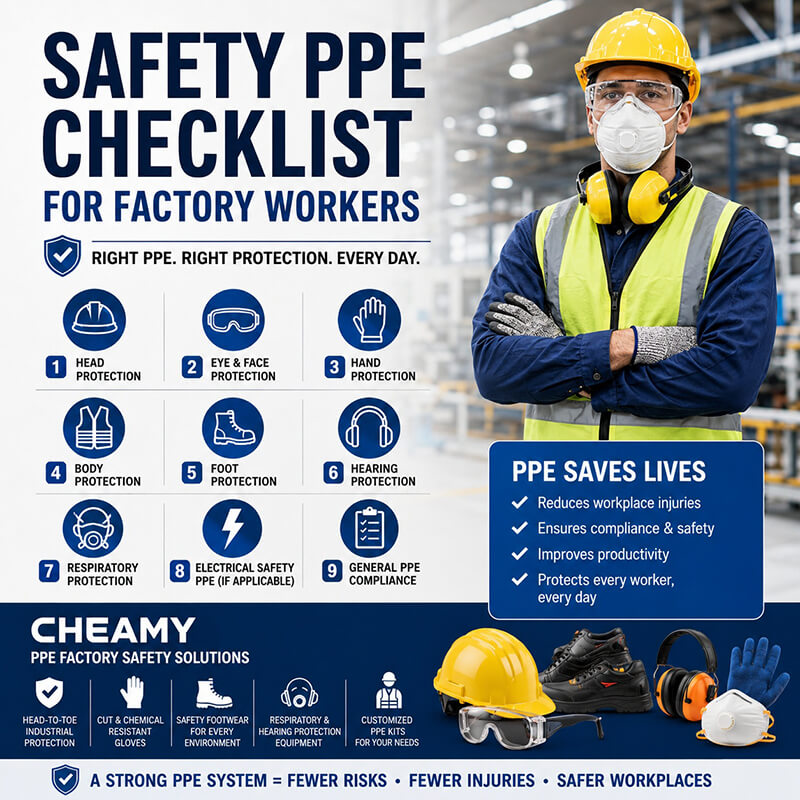
Factory environments vary widely—from assembly lines and warehouses to heavy manufacturing and metal processing—but the core safety principle is the same: workers must be protected from mechanical, chemical, electrical, and ergonomic hazards through properly selected PPE.
This checklist provides a practical, easy-to-follow PPE guide for factory operations.
1. Head Protection Checklist
Head injuries in factories often come from falling objects, low ceilings, or moving machinery.
Required PPE:
- Safety helmet (impact-resistant)
- Bump cap (for low-risk indoor assembly areas)
- Chin strap (for elevated or mobile work conditions)
✔ Check helmet for cracks or deformation before use
✔ Ensure proper fit and adjustable suspension system
✔ Replace after any impact event
2. Eye and Face Protection Checklist
Grinding, cutting, and material handling create high risk of eye injury.
Required PPE:
- Safety glasses (impact-resistant, anti-scratch)
- Safety goggles (dust and splash protection)
- Face shield (for grinding or chemical handling)
✔ Ensure side protection is included
✔ Check lens clarity and anti-fog condition
✔ Clean daily to maintain visibility
3. Hand Protection Checklist
Hands are the most frequently injured body part in factories.
Required PPE:
- Cut-resistant gloves (handling sharp materials)
- Nitrile gloves (chemical or oil exposure)
- General-purpose work gloves (assembly tasks)
- Heat-resistant gloves (hot surfaces or processes)
✔ Match glove type with task risk level
✔ Inspect for tears or wear before use
✔ Replace gloves showing reduced grip or damage
4. Body Protection Checklist
Factory work often involves sparks, dirt, oil, and mechanical contact.
Required PPE:
- High-visibility safety vests
- Work uniforms (durable, breathable fabric)
- Flame-resistant clothing (for welding or heat exposure areas)
- Chemical-resistant aprons (for liquid handling areas)
✔ Avoid loose clothing near moving machinery
✔ Ensure reflective strips are clean and visible
✔ Replace damaged or contaminated garments
5. Foot Protection Checklist
Foot injuries in factories are common due to heavy objects and slippery floors.
Required PPE:
- Steel toe or composite toe safety shoes
- Slip-resistant outsole footwear
- Puncture-resistant soles
- Anti-static safety shoes (for electronics factories)
✔ Check sole grip before entering wet/oily areas
✔ Ensure toe cap is not deformed
✔ Keep footwear clean and dry
6. Hearing Protection Checklist
Noise exposure is common in manufacturing and machinery-heavy environments.
Required PPE:
- Earplugs (disposable or reusable)
- Earmuffs (for high-noise zones)
- Helmet-mounted hearing protection (for integrated systems)
✔ Use protection in areas above 85 dB
✔ Replace disposable earplugs daily
✔ Ensure proper sealing for earmuffs
7. Respiratory Protection Checklist
Factories may generate dust, fumes, or chemical vapors.
Required PPE:
- Disposable dust masks (low-risk environments)
- Half-mask respirators (medium-risk exposure)
- Full-face respirators (chemical or heavy fumes)
- PAPR systems (long-duration or high-risk exposure)
✔ Perform fit testing before use
✔ Replace filters regularly
✔ Never reuse disposable masks
8. Electrical Safety PPE Checklist (if applicable)
For electrical maintenance or electronics factories.
Required PPE:
- Insulated gloves
- Arc-rated clothing
- Face shields for arc flash protection
- Insulated tools (when required)
✔ Confirm arc rating matches task risk level
✔ Inspect insulation integrity before use
✔ Follow lockout/tagout procedures
9. General PPE Compliance Checklist
- PPE is task-specific and not one-size-fits-all
- Workers receive proper training before use
- PPE is inspected before each shift
- Damaged PPE is replaced immediately
- Storage areas are clean and dry
- Safety signage is clearly displayed
CHEAMY PPE Factory Safety Solutions
CHEAMY PPE provides a full range of factory PPE solutions, including:
- Head-to-toe industrial protection systems
- Cut-resistant and chemical-resistant gloves
- Safety footwear for different factory environments
- Respiratory and hearing protection equipment
- Customized PPE kits based on factory risk levels
We focus on practical protection that improves both safety and efficiency in real production environments.
Conclusion
A factory PPE checklist is not just a compliance document—it is a daily safety tool. When properly implemented, it reduces workplace accidents, improves productivity, and ensures consistent protection across all operations.
A strong PPE system means fewer risks, fewer injuries, and a safer working environment for every worker.