
How Often Should PPE Be Replaced? A Practical Guide for Workplace Safety
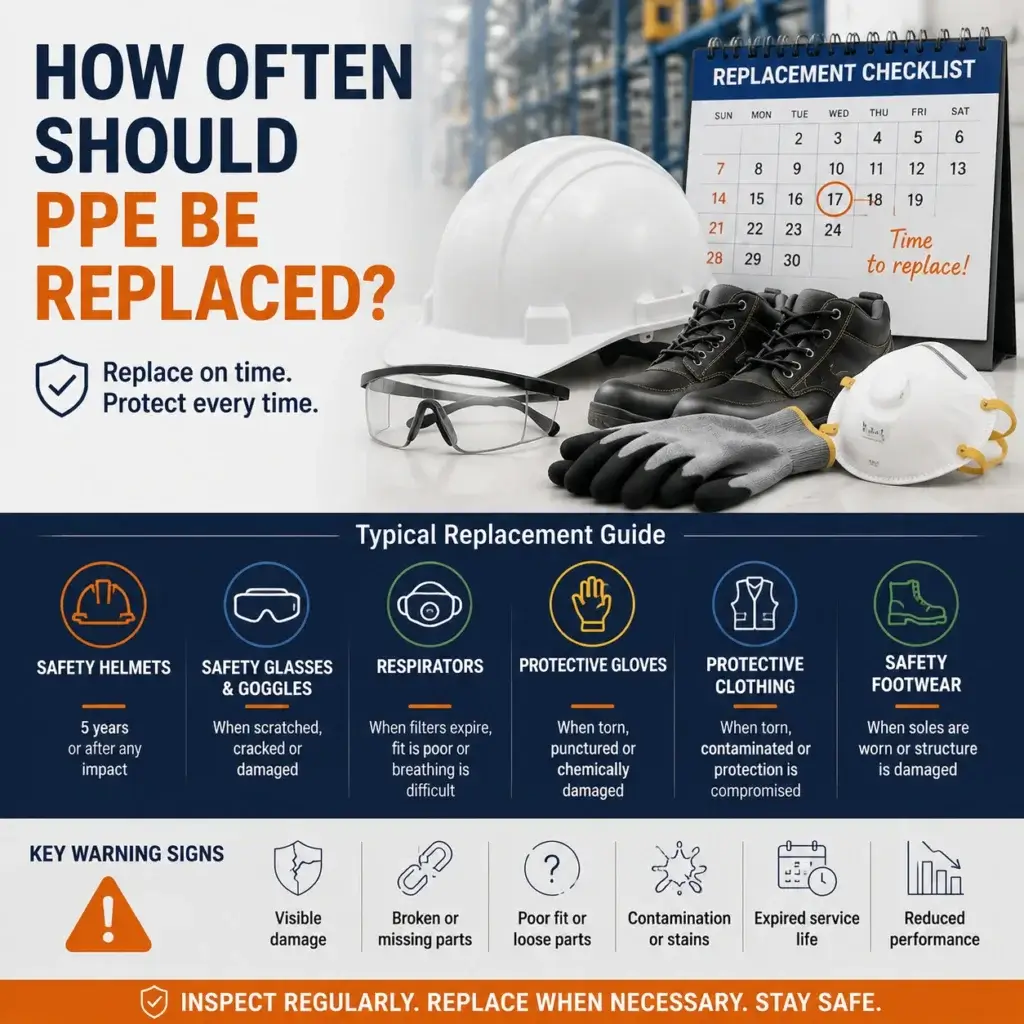
How often should PPE be replaced? The answer depends on the type of equipment, workplace conditions, and regular inspections. This guide explains the typical lifespan of common PPE, key warning signs of wear, and best practices for timely replacement to ensure workplace safety.
Smart PPE and Digital Workplace Safety: How Wearable Technology Is Transforming Worker Protection
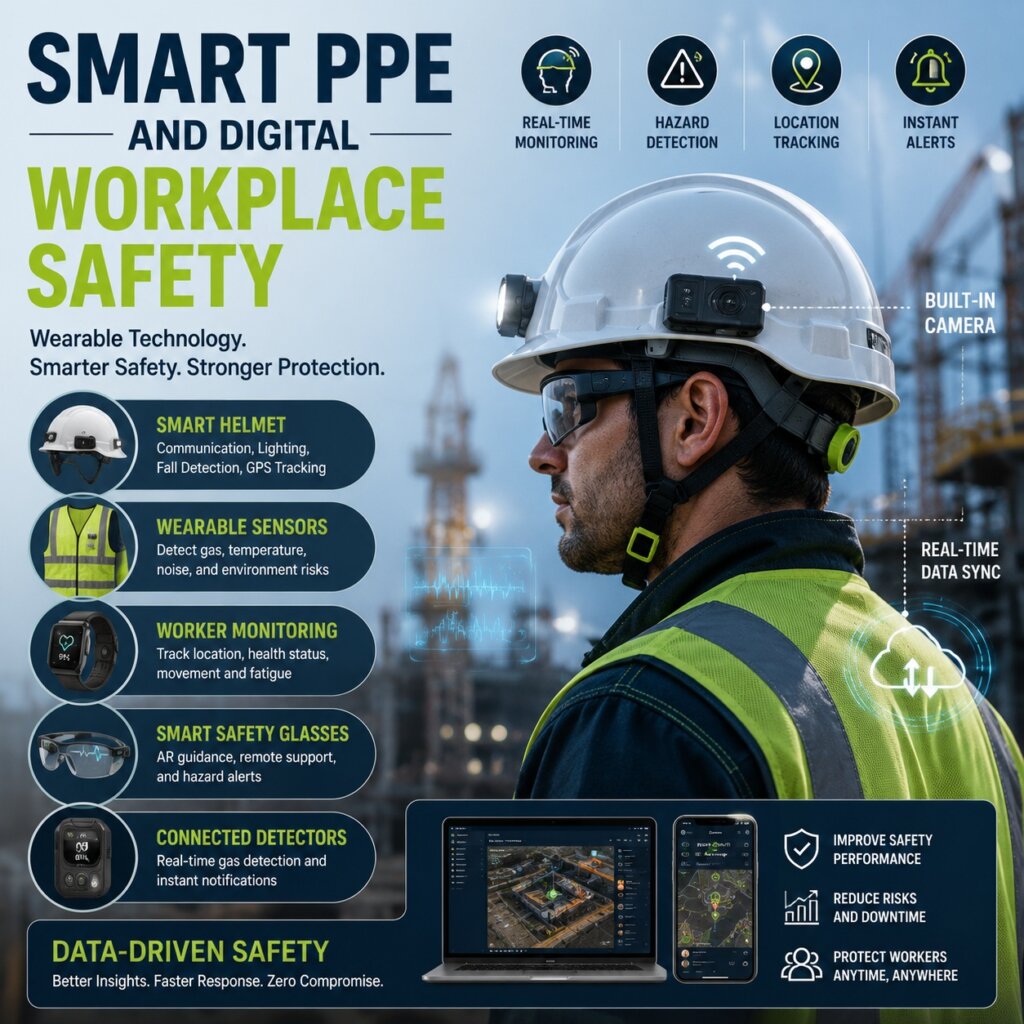
Smart PPE is transforming workplace safety by combining traditional protective equipment with digital technologies such as smart helmets, wearable sensors, and real-time worker monitoring. These innovations help improve hazard detection, emergency response, and operational efficiency, enabling businesses to build safer, smarter, and more connected workplaces.
Sustainable PPE: The Future of Eco-Friendly Safety Equipment
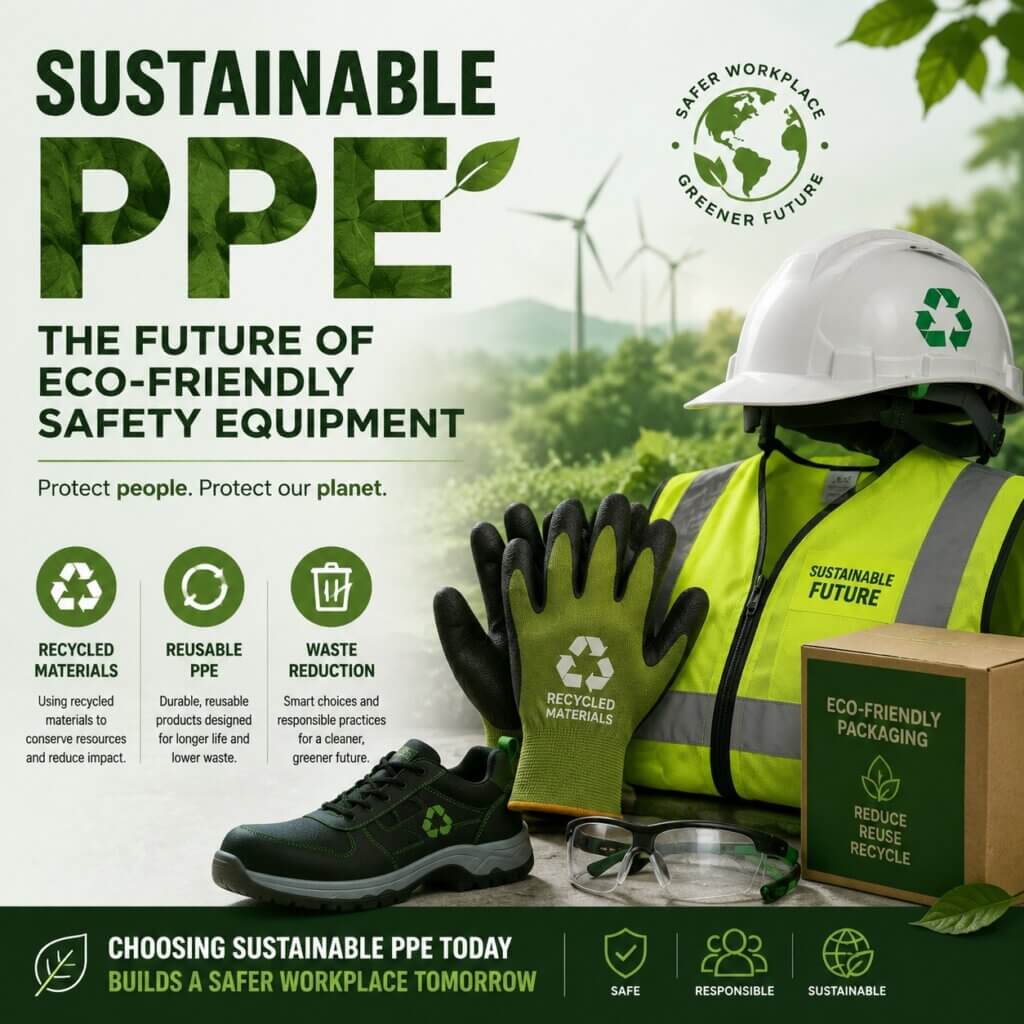
Sustainable PPE helps organizations protect workers while reducing environmental impact. By choosing recycled materials, reusable PPE, durable products, and eco-friendly packaging, businesses can reduce waste, improve resource efficiency, and support long-term sustainability goals without compromising workplace safety.
Can N95 Masks Be Reused? What Every Workplace Should Know
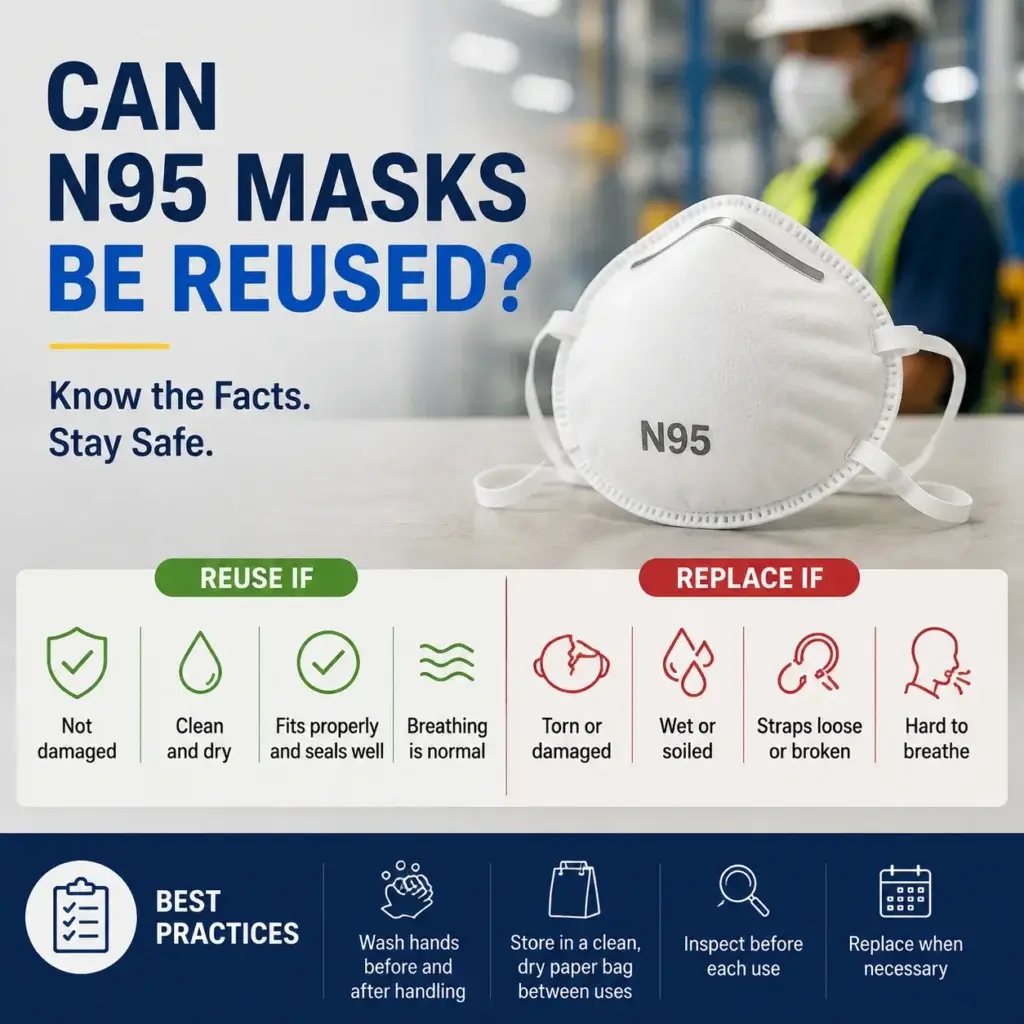
Can N95 masks be reused safely? This guide explains when reuse is appropriate, how to inspect and store N95 respirators, and the key signs that indicate it’s time for replacement to ensure effective respiratory protection.
Can PPE Be Reused? A Complete Guide to Reusable and Disposable PPE
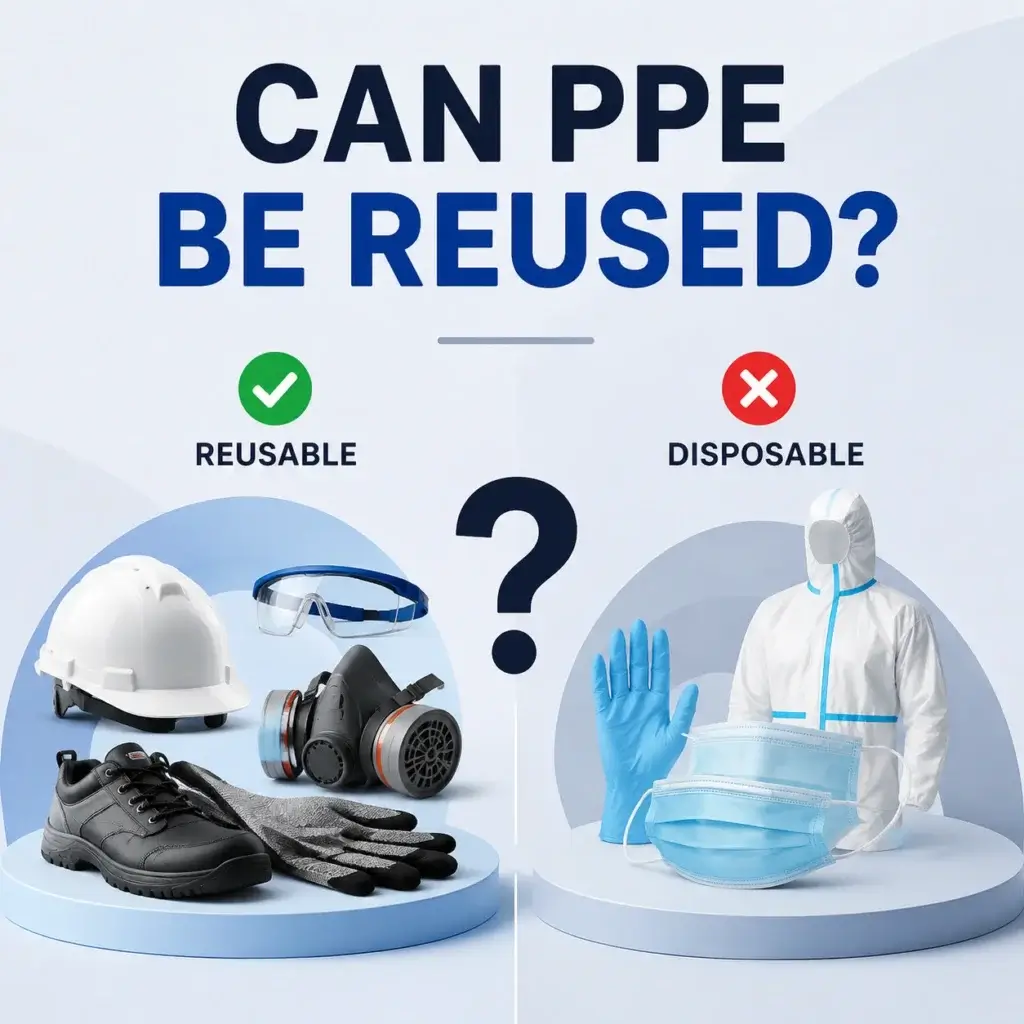
Can PPE be reused? It depends on the type of equipment. This guide explains the difference between reusable and disposable PPE, how to inspect protective equipment before reuse, and best practices for maintenance and replacement to ensure workplace safety.
OEM PPE Solutions: How to Build Your Own Safety Brand
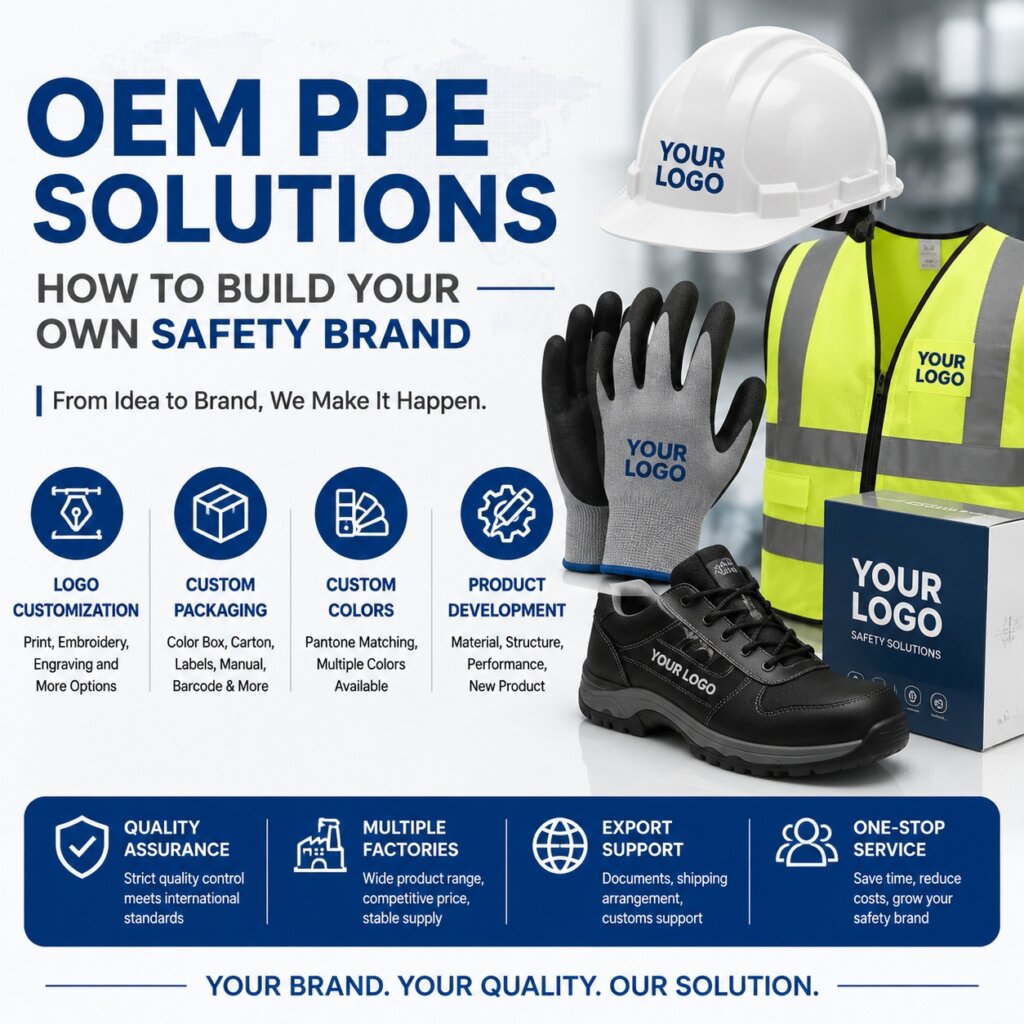
Building a private label PPE brand helps businesses strengthen brand recognition, improve customer loyalty, and stand out in competitive markets. An experienced OEM PPE supplier can provide logo customization, custom packaging, color matching, product development, and export support to help turn your ideas into successful branded safety products.
Why Choose a PPE Supplier Instead of Buying Directly from a Factory?
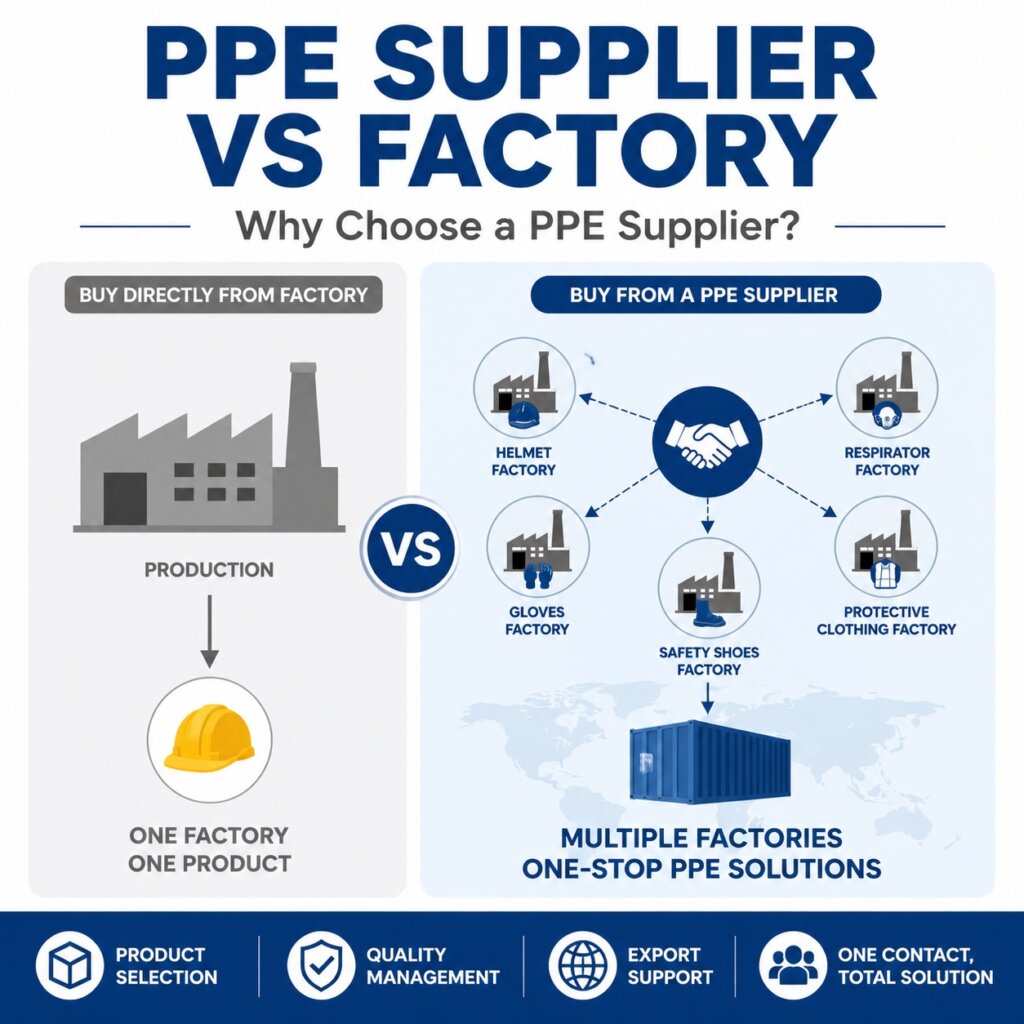
Choosing between a PPE supplier and a factory depends on your sourcing needs. While factories focus on manufacturing individual products, a professional PPE supplier offers access to multiple qualified factories, broader product selection, quality management, and export support. For international buyers purchasing multiple PPE categories, partnering with an experienced PPE sourcing partner simplifies procurement, reduces risks, and improves supply chain efficiency.
EN 149 Respirator Standard Explained: Understanding FFP1, FFP2 & FFP3 Masks
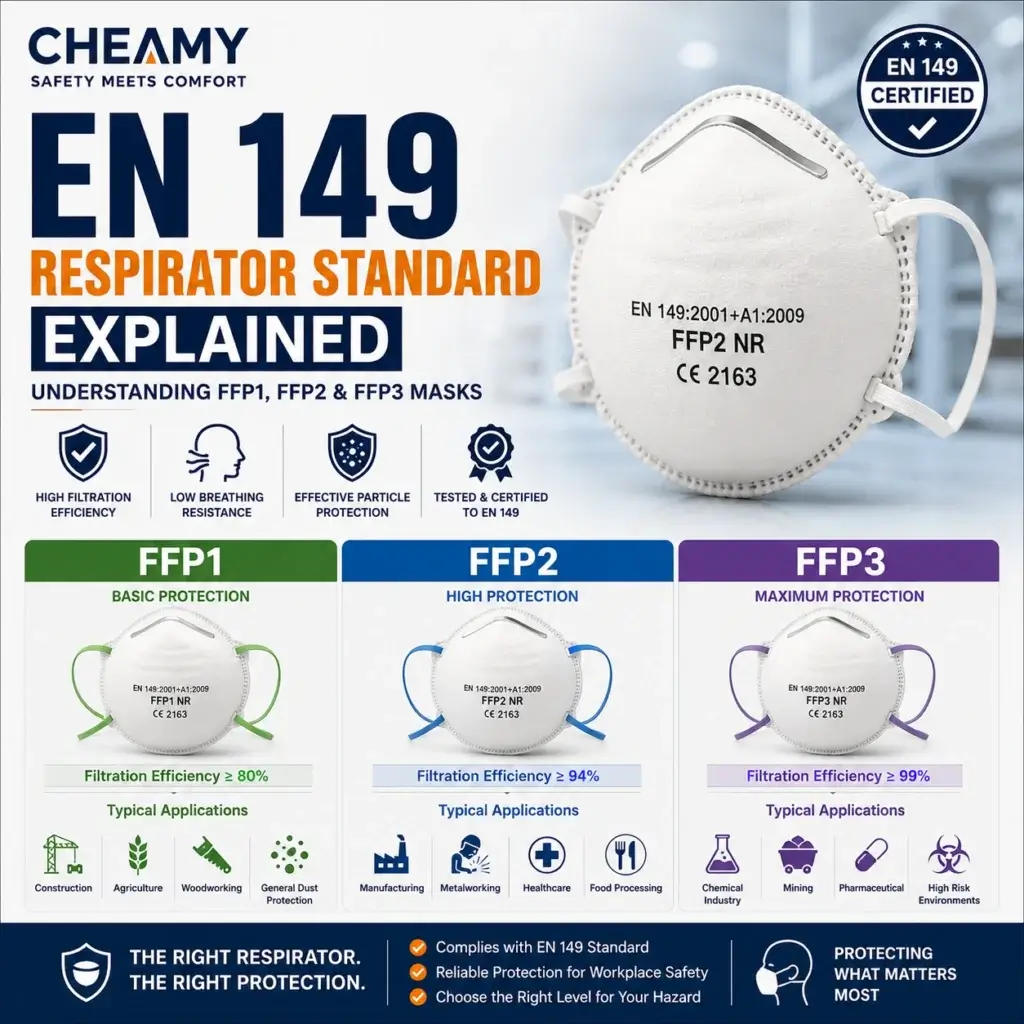
Learn the EN 149 respirator standard and understand the differences between FFP1, FFP2, and FFP3 masks. This guide explains filtration efficiency, workplace applications, and how to choose the right disposable respirator for construction, manufacturing, chemical processing, healthcare, and other industrial environments.
ANSI Z89.1 Hard Hat Standard Explained: How to Choose the Right Safety Helmet
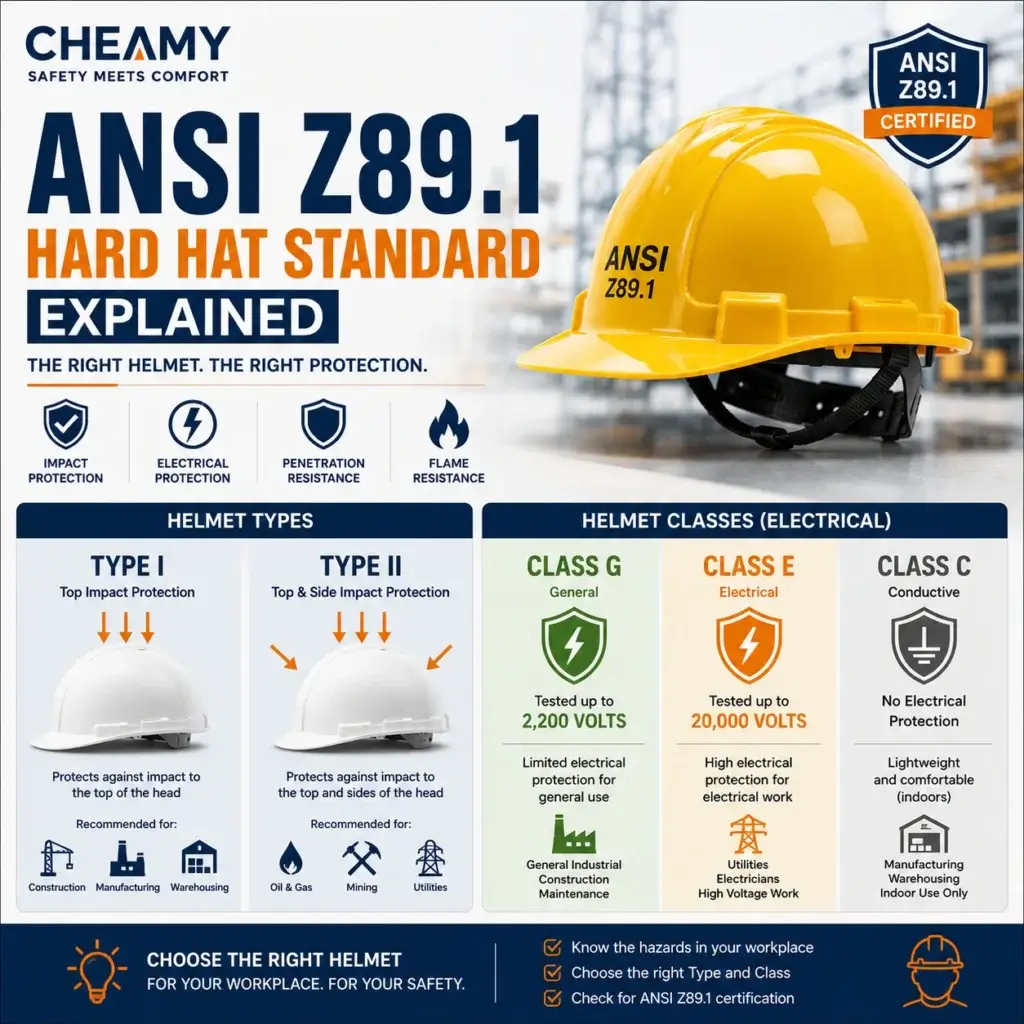
Learn how the ANSI Z89.1 hard hat standard classifies industrial safety helmets by Type I, Type II, Class G, Class E, and Class C. This guide explains helmet protection levels, electrical classifications, and how to choose the right ANSI-certified hard hat for construction, manufacturing, utilities, mining, and industrial workplaces.
EN 388 Gloves Standard Explained: How to Choose the Right Cut Resistant Gloves
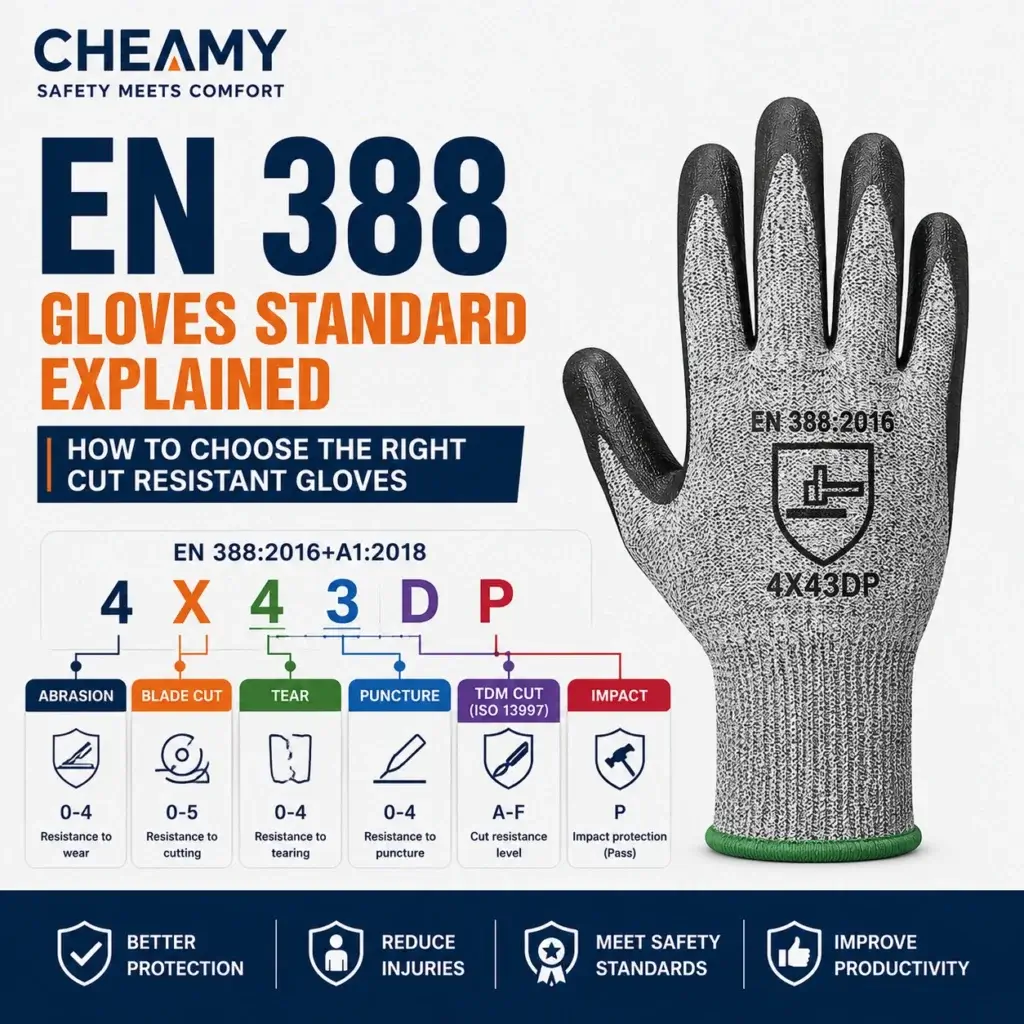
Learn how the EN 388 gloves standard measures abrasion, cut, tear, puncture, and impact resistance. This guide explains EN 388 ratings, how to read glove markings, and how to choose the right cut resistant gloves for manufacturing, construction, logistics, automotive, and other industrial applications.
Safety Shoes Buying Guide: Steel Toe vs Composite Toe
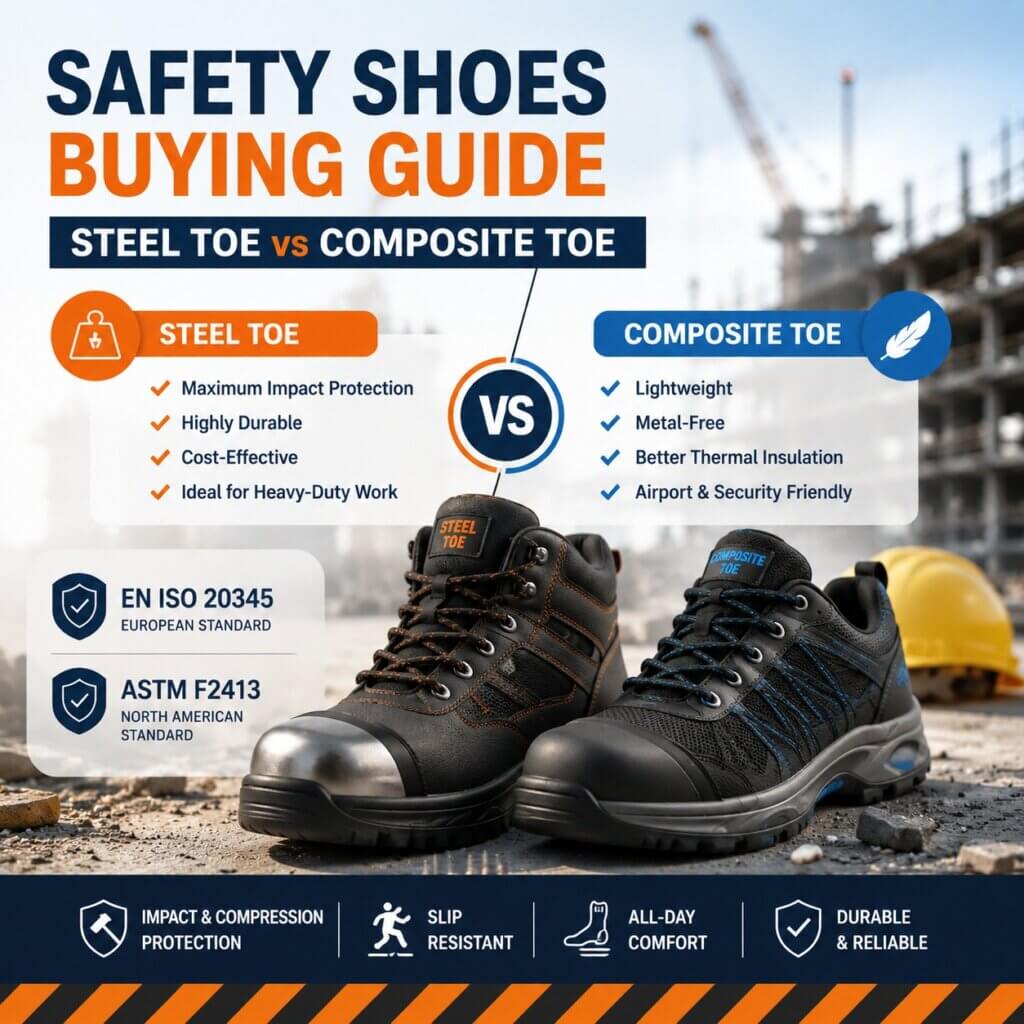
Choosing between steel toe shoes and composite toe safety shoes depends on your workplace hazards, comfort needs, and working environment. This guide compares protection, weight, metal detection, and key applications to help you select the right industrial safety footwear for maximum safety and performance.
Safety Helmet Buying Guide: How to Choose the Right Hard Hat
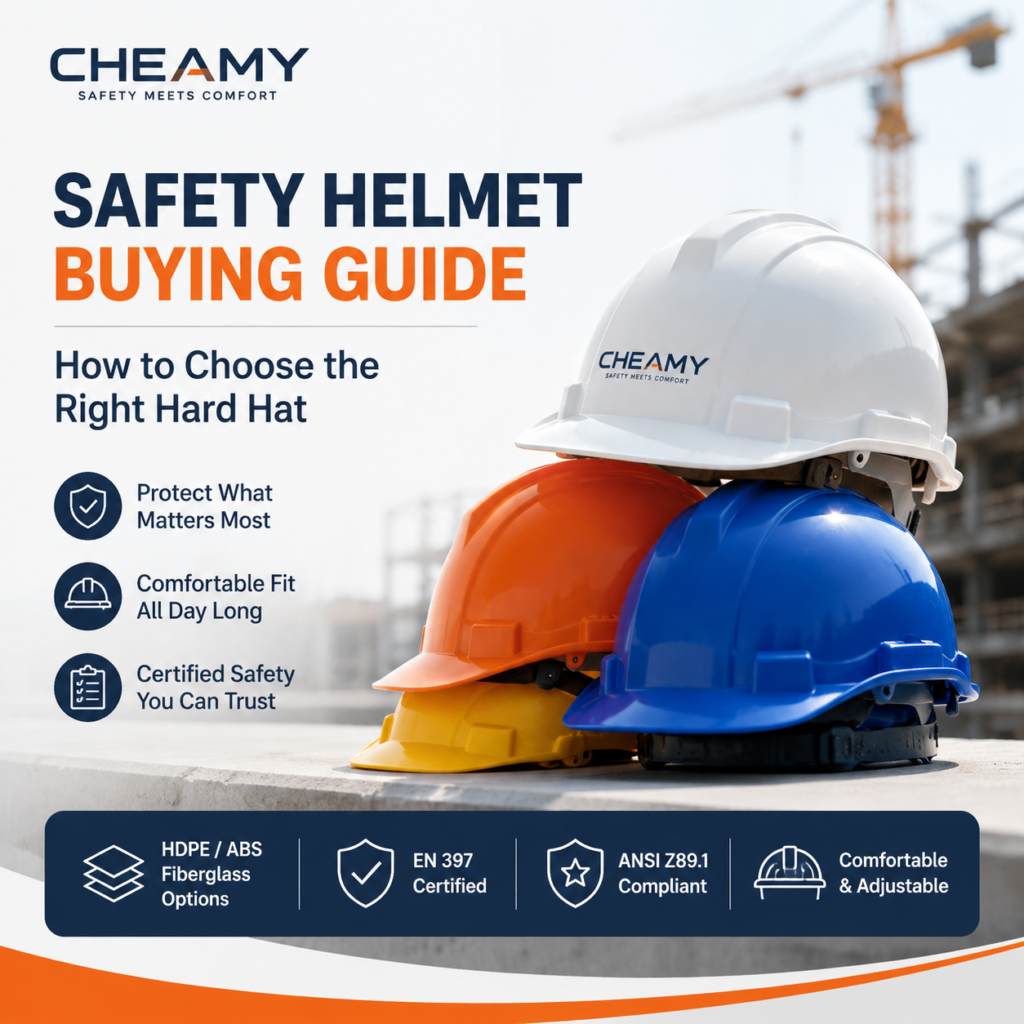
Choosing the right industrial safety helmet is essential for protecting workers from impact, falling objects, and electrical hazards. This guide compares HDPE, ABS, and fiberglass hard hats, explains EN 397 and ANSI Z89.1 standards, and helps you select the best safety helmet for construction, manufacturing, utilities, and industrial applications.