Blog

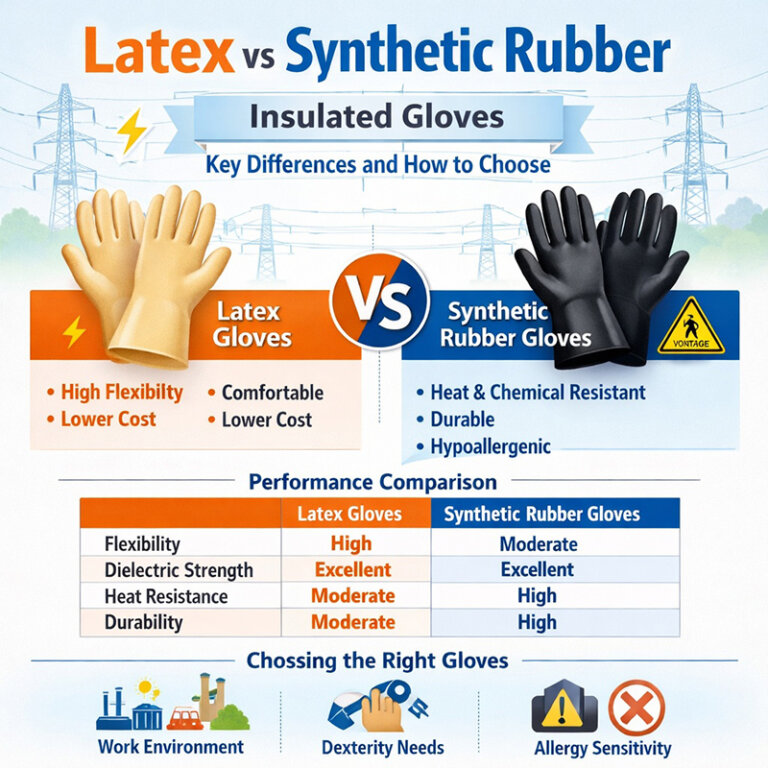
Comparison of latex and synthetic rubber insulated gloves showing flexibility, durability, heat resistance, and application differences for electrical safety

Latex vs Synthetic Rubber Insulated Gloves: Key Differences and How to Choose

Latex and synthetic rubber insulated gloves are both essential for electrical safety, but they differ in flexibility, durability, chemical resistance, and suitability for various environments. This guide helps you understand their key differences and choose the right gloves for safe and comfortable electrical work.

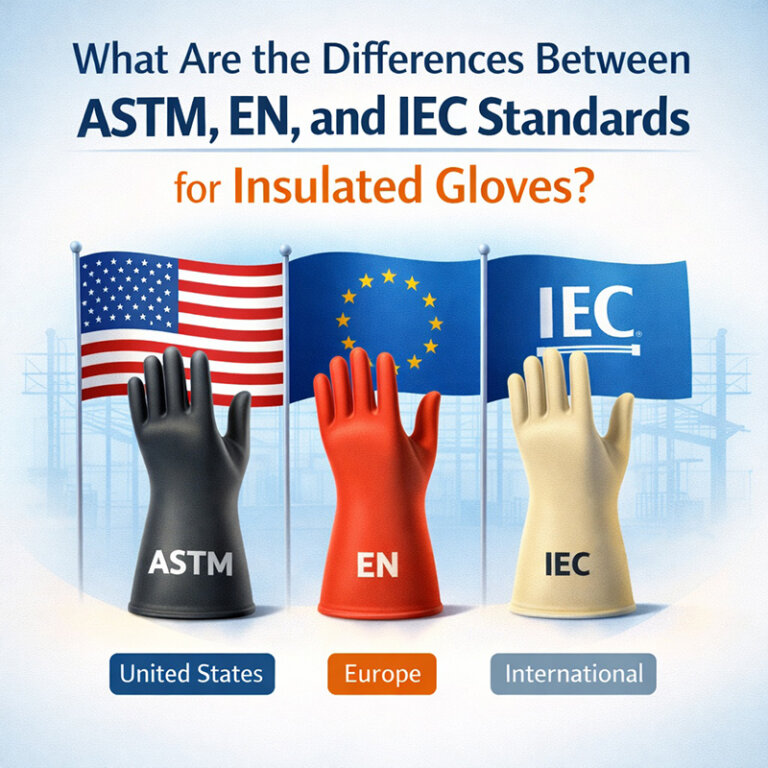
Three electrical insulating gloves labeled ASTM, EN, and IEC with corresponding flags and voltage protection icons, illustrating the differences in international safety standards for live electrical work.

What Are the Differences Between ASTM, EN, and IEC Standards for Insulated Gloves?

Electrical insulated gloves must meet strict safety standards to ensure protection during live electrical work. This article explains the key differences between ASTM (USA), EN (Europe), and IEC (international) standards, including voltage classes, testing requirements, and application differences to help users choose the right insulated gloves for different markets and projects.

About Director

Recent Posts

Follow On Us

Twitter
LinkedIn
WhatsApp
Pinterest

Receive Your Personalized Quote Instantly!

Fill out the form to receive a personalized quote tailored to your needs.