Skip to content
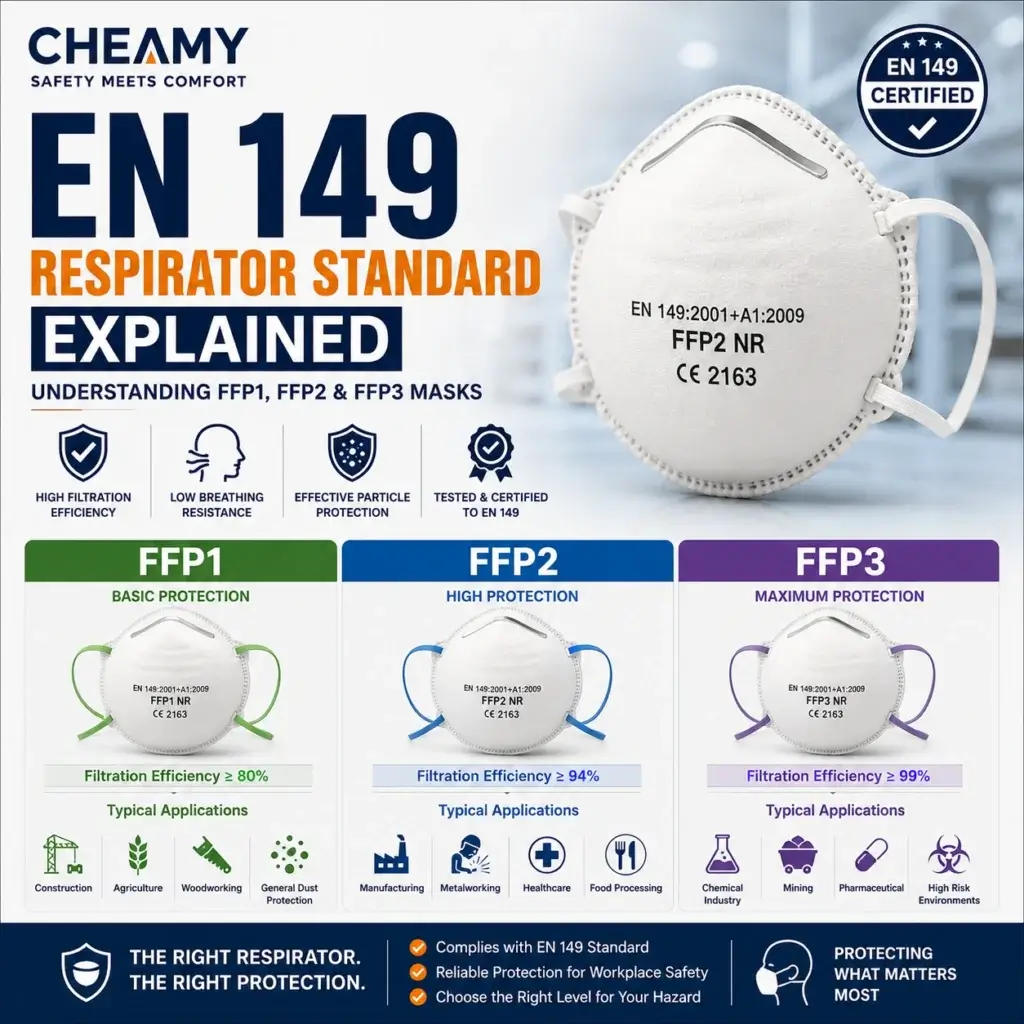
Respiratory hazards are among the most common risks in industrial workplaces. Dust, fumes, aerosols, smoke, and airborne particles can seriously affect workers’ health if proper respiratory protection is not used.
One of the most widely recognized European standards for disposable filtering facepiece respirators is EN 149. This standard defines the performance requirements for FFP respirators and helps employers choose suitable protection for different workplace hazards.
But what is the difference between FFP1, FFP2, and FFP3? Which respirator should you choose for construction, manufacturing, or chemical processing?
This guide explains the EN 149 respirator standard, compares FFP1, FFP2, and FFP3 masks, and helps you select the right respiratory protection.
What Is EN 149?
EN 149 is the European standard for filtering half masks that protect against airborne particles.
Respirators certified to EN 149 are tested for:
- Particle filtration efficiency
- Total inward leakage
- Breathing resistance
- Flammability
- Practical performance during use
EN 149 certified respirators are widely used in:
- Construction
- Manufacturing
- Mining
- Food processing
- Pharmaceutical production
- Healthcare
- Agriculture
Why Is EN 149 Important?
Not every airborne hazard requires the same level of respiratory protection.
For example:
- Construction workers may only need protection against cement dust.
- Metalworkers may require protection from welding fumes.
- Pharmaceutical workers often need higher filtration efficiency.
EN 149 allows employers and buyers to compare respirators based on tested performance and choose suitable protection for each workplace.
Benefits include:
- Reliable respiratory protection
- Compliance with European safety regulations
- Easier product comparison
- Better worker safety
- Reduced exposure to airborne particles
Understanding FFP Respirator Classifications
EN 149 divides disposable respirators into three performance levels:
- FFP1
- FFP2
- FFP3
Each level offers a different degree of filtration efficiency and protection.
FFP1 Respirators
FFP1 respirators provide basic protection against non-toxic dust and low concentrations of airborne particles.
Typical applications
- Construction
- Woodworking
- Agriculture
- General maintenance
Suitable for low-risk dusty environments.
FFP2 Respirators
FFP2 respirators provide a higher level of particle filtration and are commonly used in industrial and healthcare settings.
Typical applications
- Manufacturing
- Metalworking
- Food processing
- Pharmaceutical production
- Healthcare
Suitable for moderate-risk airborne particles and fine dust.
FFP3 Respirators
FFP3 respirators offer the highest level of protection under EN 149.
They are designed for environments with hazardous airborne particles.
Typical applications
- Chemical industry
- Mining
- Hazardous dust removal
- Pharmaceutical production
- High-risk industrial operations
FFP3 respirators provide maximum particle filtration for demanding workplaces.
FFP1 vs FFP2 vs FFP3
| Feature | FFP1 | FFP2 | FFP3 |
|---|---|---|---|
| Filtration Efficiency | ≥80% | ≥94% | ≥99% |
| Protection Level | Basic | High | Maximum |
| Typical Applications | Dust | Fine particles | Hazardous particles |
| Common Industries | Construction, agriculture | Manufacturing, healthcare | Chemical, mining, pharmaceutical |
For a more detailed comparison, read our guide: FFP1 vs FFP2 vs FFP3 Masks: What’s the Difference?
How to Choose the Right EN 149 Respirator
When selecting an EN 149 respirator, consider:
Workplace Hazards
Identify exposure to:
- Dust
- Smoke
- Metal fumes
- Aerosols
- Fine particles
Required Protection Level
Choose:
- FFP1 for low-risk dust.
- FFP2 for fine particles and moderate industrial hazards.
- FFP3 for hazardous particles and high-risk environments.
Comfort and Fit
Respirators should:
- Seal properly to the face
- Allow comfortable breathing
- Fit securely during movement
- Be compatible with safety glasses and helmets
A proper fit is essential to achieve the expected level of protection.
Common Applications
Construction
Recommended:
- FFP1
- FFP2
Manufacturing
Recommended:
- FFP2
Metalworking
Recommended:
- FFP2
- FFP3
Chemical Industry
Recommended:
- FFP3
Pharmaceutical Industry
Recommended:
- FFP2
- FFP3
Common Buying Mistakes
Avoid these mistakes:
- Choosing a respirator based only on price
- Ignoring EN 149 certification
- Selecting an insufficient protection level
- Wearing a poorly fitted mask
- Reusing disposable respirators beyond their intended use
- Failing to replace damaged or contaminated respirators
Proper respirator selection and fit are essential for effective respiratory protection.
Why Choose CHEAMY Respiratory Protection?
CHEAMY offers a comprehensive range of respiratory protection solutions for industrial and professional applications.
Our products include:
- FFP1 Respirators
- FFP2 Respirators
- FFP3 Respirators
- Disposable Dust Masks
- Half Face Respirators
- Full Face Respirators
- Respirator Filters
Designed for comfort, reliable filtration, and compliance with international standards, CHEAMY respirators help protect workers in construction, manufacturing, chemical processing, healthcare, mining, and other demanding industries.
Safety Meets Comfort — Professional Respiratory Protection for Every Workplace.
Conclusion
Understanding the EN 149 respirator standard is essential for selecting the right filtering facepiece respirator.
By comparing FFP1, FFP2, and FFP3 protection levels and choosing certified products, employers can improve worker safety, reduce airborne exposure, and comply with European respiratory protection requirements.
Selecting the right respirator is an important investment in both health and workplace safety.