Skip to content
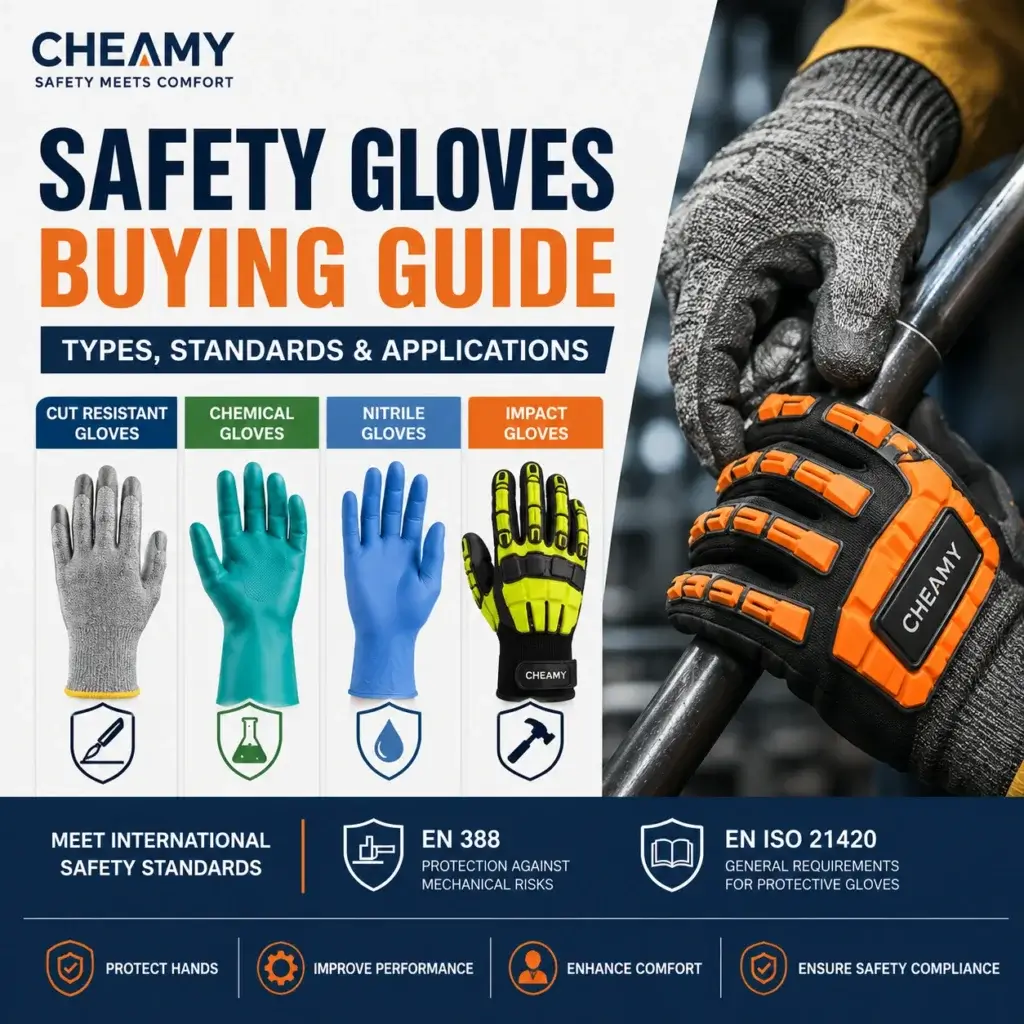
Hand injuries are among the most common workplace accidents across manufacturing, construction, logistics, chemical processing, automotive, and general industrial operations. Sharp materials, hazardous chemicals, heavy impacts, and abrasive surfaces can all cause serious injuries if workers are not properly protected.
Selecting the right industrial safety gloves is one of the most effective ways to reduce workplace risks while improving productivity and worker confidence.
However, not all gloves are designed for the same purpose. Different tasks require different materials, protection levels, and performance standards.
This guide explains the most common safety gloves types, relevant international standards, and practical applications to help you choose the right gloves for every job.
Why Are Safety Gloves Important?
Hands are exposed to workplace hazards every day. Even routine tasks can lead to cuts, burns, chemical exposure, or impact injuries without appropriate protection.
Safety gloves help to:
- Protect hands from cuts and punctures
- Prevent chemical burns and skin irritation
- Reduce impact injuries
- Improve grip and handling
- Enhance worker confidence and productivity
- Meet workplace safety regulations
The correct gloves should always match the specific hazards of the working environment.
Common Workplace Hand Hazards
Before selecting gloves, employers should identify the primary hazards workers face.
Typical hand hazards include:
- Sharp edges and blades
- Abrasion and rough surfaces
- Chemical splashes
- Oils and solvents
- Heavy impacts
- High or low temperatures
- Vibrations
- General material handling
Different hazards require different glove materials and protection levels.
Types of Industrial Safety Gloves
1. Cut Resistant Gloves
Cut resistant gloves are designed to protect workers from sharp objects such as sheet metal, glass, knives, and machinery components.
Suitable industries
- Metal fabrication
- Glass manufacturing
- Automotive
- Construction
- Warehousing
- Recycling
Advantages
- Excellent cut protection
- High dexterity
- Comfortable for long-term wear
- Good grip in dry or oily conditions
Modern cut resistant gloves are commonly manufactured using HPPE, fiberglass, steel fiber, or engineered yarns.
2. Chemical Gloves
Chemical gloves protect workers from hazardous liquids and corrosive substances.
Common applications include:
- Chemical manufacturing
- Laboratories
- Pharmaceutical production
- Industrial cleaning
- Agriculture
Common glove materials include:
- Nitrile
- Neoprene
- Butyl Rubber
- PVC
- Latex (for selected applications)
Always select gloves based on the chemicals listed in the manufacturer’s chemical resistance chart.
3. Nitrile Gloves
Nitrile gloves are one of the most widely used disposable and reusable safety gloves due to their excellent chemical resistance and puncture protection.
Advantages
- Latex-free
- Resistant to oils and grease
- Good puncture resistance
- Comfortable fit
- Suitable for medical and industrial applications
Common industries include:
- Healthcare
- Food processing
- Automotive maintenance
- Electronics
- Laboratories
4. Impact Gloves
Impact gloves are designed to protect hands from crushing and impact injuries.
Features include:
- TPR (Thermoplastic Rubber) impact protection
- Reinforced palm
- Anti-slip coating
- Excellent grip
Suitable applications:
- Oil & Gas
- Mining
- Heavy construction
- Mechanical maintenance
- Material handling
Impact gloves reduce injuries caused by dropped tools, heavy equipment, and pinch points.
Safety Gloves Standards
Choosing certified gloves ensures reliable performance and regulatory compliance.
EN ISO 21420
EN ISO 21420 specifies the general requirements for protective gloves.
It covers:
- Glove sizing
- Ergonomic design
- Comfort
- Dexterity
- Material safety
- Product marking
- Manufacturer information
This standard replaced the former EN 420 and serves as the foundation for most protective glove certifications.
EN 388
EN 388 is the primary European standard for gloves providing protection against mechanical risks.
It evaluates gloves based on:
- Abrasion resistance
- Blade cut resistance
- Tear resistance
- Puncture resistance
- TDM cut resistance
- Impact protection (optional)
Higher performance levels indicate greater protection against mechanical hazards.
How to Choose the Right Safety Gloves
When selecting industrial safety gloves, consider the following factors:
Identify Workplace Hazards
Determine whether workers face:
- Sharp objects
- Chemicals
- Heavy impacts
- Oils and grease
- Heat or cold
Select the Correct Material
Examples:
- HPPE → Cut protection
- Nitrile → Chemical resistance
- PVC → Oil resistance
- Leather → General heavy-duty work
- TPR → Impact protection
Verify Safety Standards
Choose gloves certified according to:
- EN ISO 21420
- EN 388
- EN 374 (for chemical protection if applicable)
Ensure Comfort and Fit
Well-fitting gloves improve:
- Productivity
- Dexterity
- Worker compliance
- Long-term comfort
Applications Across Different Industries
Manufacturing
Recommended gloves:
- Cut resistant gloves
- Nitrile-coated gloves
Construction
Recommended gloves:
- Impact gloves
- Heavy-duty work gloves
Chemical Industry
Recommended gloves:
- Chemical resistant gloves
- Nitrile gloves
Logistics & Warehousing
Recommended gloves:
- General work gloves
- Cut resistant gloves
Food Processing
Recommended gloves:
- Disposable nitrile gloves
- Food-safe protective gloves
Common Mistakes When Buying Safety Gloves
Avoid these common purchasing mistakes:
- Choosing gloves based only on price
- Ignoring workplace hazards
- Wearing oversized or undersized gloves
- Using one glove type for every task
- Not checking EN certifications
- Reusing disposable gloves
The right glove selection improves both safety and cost efficiency.
Why Choose CHEAMY Safety Gloves?
CHEAMY provides a complete range of industrial safety gloves designed for different workplace applications.
Our glove solutions include:
- Cut Resistant Gloves
- Chemical Resistant Gloves
- Nitrile Gloves
- Impact Gloves
- General Work Gloves
CHEAMY products are designed to provide reliable protection, comfort, and durability while meeting international safety standards.
Whether you work in manufacturing, construction, logistics, chemical processing, or maintenance, CHEAMY offers safety glove solutions that help protect workers and improve operational efficiency.
Safety Meets Comfort — Hand Protection You Can Trust.
Conclusion
Understanding the different safety gloves types is essential for protecting workers from workplace hazards.
By identifying risks, selecting certified industrial safety gloves, and following EN 388 and EN ISO 21420 standards, companies can reduce injuries, improve compliance, and create safer working environments.
The right safety gloves are not just protective equipment—they are an investment in worker safety, productivity, and long-term business success.