Skip to content
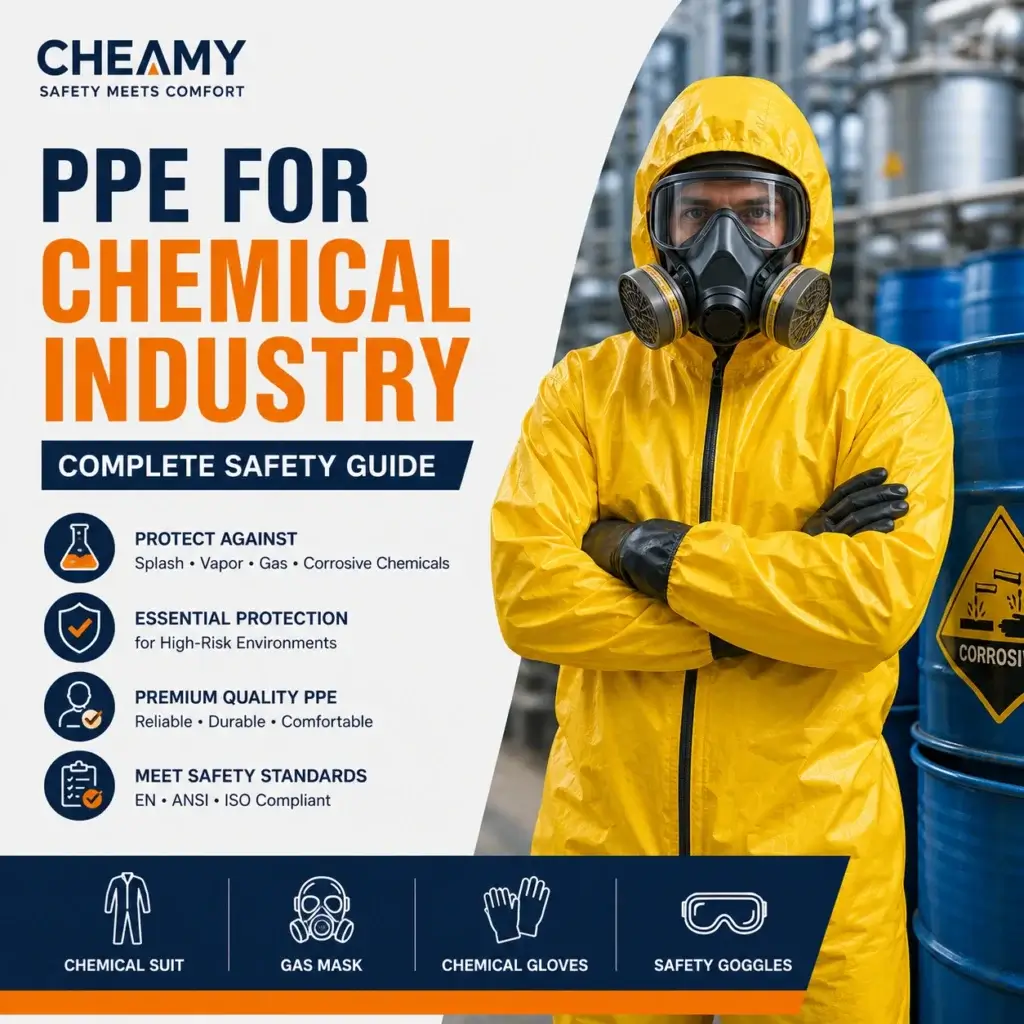
The chemical industry is one of the most hazardous working environments. Employees may be exposed to corrosive liquids, toxic gases, chemical vapors, and hazardous splashes every day. Without proper protection, even a small exposure can cause serious injuries, long-term health problems, or life-threatening accidents.
Selecting the right chemical PPE is essential for protecting workers, reducing workplace risks, and complying with international safety standards.
In this guide, we’ll explain common chemical hazards, the essential chemical protective equipment required for different tasks, and how to choose the right PPE for your workplace.
Why Is Chemical PPE Important?
Unlike mechanical hazards that usually cause immediate injuries, chemical hazards may affect workers through skin contact, inhalation, or eye exposure. Some chemicals cause instant burns, while others can lead to chronic illnesses after repeated exposure.
Proper chemical PPE helps:
- Protect workers from hazardous substances
- Reduce the risk of burns and skin irritation
- Prevent inhalation of toxic gases and vapors
- Minimize eye injuries from chemical splashes
- Improve workplace safety and regulatory compliance
No single piece of PPE can protect against every chemical hazard. The correct combination of protective equipment should always be selected based on a workplace risk assessment.
Common Chemical Hazards
Understanding the type of hazard is the first step in selecting appropriate chemical protective equipment.
1. Chemical Splash
Chemical splashes are common during mixing, transferring, filling, or cleaning operations.
Examples include:
- Acids
- Alkalis
- Solvents
- Cleaning agents
Potential injuries:
- Skin burns
- Eye damage
- Chemical irritation
- Clothing contamination
Recommended PPE:
- Chemical protective suit
- Chemical-resistant gloves
- Safety goggles
- Face shield
2. Chemical Vapor
Some chemicals evaporate quickly and produce harmful vapors that may be inhaled.
Common sources include:
- Paints
- Solvents
- Industrial cleaners
- Adhesives
Potential risks:
- Respiratory irritation
- Dizziness
- Long-term lung damage
Recommended PPE:
- Gas mask with appropriate filter cartridges
- Chemical goggles
- Chemical protective clothing
3. Toxic Gas
Certain industrial gases can be extremely dangerous, especially in confined spaces.
Examples include:
- Chlorine
- Ammonia
- Hydrogen sulfide
- Sulfur dioxide
Potential risks:
- Poisoning
- Oxygen deficiency
- Respiratory failure
Recommended PPE:
- Full-face gas mask
- Suitable gas filters
- Chemical protective suit
4. Corrosive Chemicals
Highly corrosive chemicals can rapidly damage skin, eyes, and equipment.
Examples include:
- Sulfuric acid
- Nitric acid
- Sodium hydroxide
- Hydrochloric acid
Recommended PPE:
- Chemical-resistant suit
- Chemical-resistant gloves
- Safety goggles
- Chemical-resistant boots
Essential Chemical Protective Equipment
Choosing the right chemical protective equipment depends on the substances being handled and the level of exposure.
Chemical Protective Suit
A chemical protective suit forms the primary barrier between hazardous chemicals and the worker.
Key features:
- Chemical-resistant materials
- Sealed seams
- Liquid splash protection
- Comfortable fit for extended wear
Suitable for:
- Chemical plants
- Laboratories
- Pharmaceutical manufacturing
- Industrial cleaning
Gas Mask
Gas masks protect workers from harmful gases, vapors, and airborne contaminants.
When selecting a gas mask, consider:
- Type of chemical
- Filter cartridge compatibility
- Exposure level
- Working environment
For highly hazardous environments, full-face respirators provide additional eye protection.
Chemical-Resistant Gloves
Hands are often the first body part exposed to chemicals.
Common glove materials include:
- Nitrile
- Neoprene
- Butyl rubber
- PVC
The correct glove material should always match the specific chemicals being handled.
Safety Goggles
Chemical splashes can cause permanent eye injuries within seconds.
Safety goggles should provide:
- Chemical splash resistance
- Anti-fog coating
- Comfortable sealing
- Wide field of vision
For high-risk operations, goggles may be combined with a face shield.
How to Choose the Right Chemical PPE
When selecting chemical PPE, consider the following factors:
Type of Chemical
Different chemicals require different protective materials.
Concentration
Highly concentrated chemicals may require a higher level of protection.
Exposure Time
Longer exposure increases the need for durable protective equipment.
Working Environment
Indoor laboratories, chemical plants, and outdoor facilities may require different PPE combinations.
Applicable Safety Standards
Always choose PPE certified to relevant international standards.
Examples include:
- EN 374 — Chemical Protective Gloves
- EN 14605 — Liquid-Tight Protective Clothing
- EN 166 — Eye Protection
- EN 136 — Full Face Respirators
Best Practices for Chemical Safety
In addition to wearing appropriate PPE, employers should follow these safety practices:
- Conduct regular hazard assessments
- Train workers on proper PPE use
- Inspect PPE before every use
- Replace damaged or contaminated equipment immediately
- Store chemical PPE according to manufacturer recommendations
- Ensure emergency eyewash stations and showers are accessible
Remember, PPE is the last line of defense and should always be used together with engineering controls and safe work procedures.
Common Mistakes When Using Chemical PPE
Avoid these common mistakes:
- Using general work gloves instead of chemical-resistant gloves
- Wearing damaged protective clothing
- Selecting the wrong gas filter cartridge
- Failing to inspect PPE before use
- Reusing disposable chemical protective equipment
- Ignoring manufacturer replacement recommendations
Proper PPE selection and maintenance are essential for effective chemical protection.
Why Choose CHEAMY Chemical Protection Solutions?
At CHEAMY, we understand that every chemical workplace presents unique hazards. Our Chemical Protection product range is designed to provide reliable protection while maintaining comfort and durability for daily industrial use.
Our chemical PPE solutions include:
- Chemical Protective Suits
- Gas Masks
- Chemical-Resistant Gloves
- Safety Goggles
- Face Shields
- Protective Boots
Whether you operate in chemical manufacturing, laboratories, pharmaceuticals, industrial cleaning, or hazardous material handling, CHEAMY offers dependable chemical protective equipment to help safeguard your workforce.
Safety Meets Comfort — Professional Chemical Protection by CHEAMY.
Conclusion
Chemical hazards cannot be eliminated entirely, but the risks can be significantly reduced with the right chemical PPE and chemical protective equipment.
By identifying workplace hazards, selecting certified protective equipment, and maintaining proper safety procedures, employers can create a safer working environment while improving compliance and productivity.
Choosing the right PPE today means protecting your workers for tomorrow.