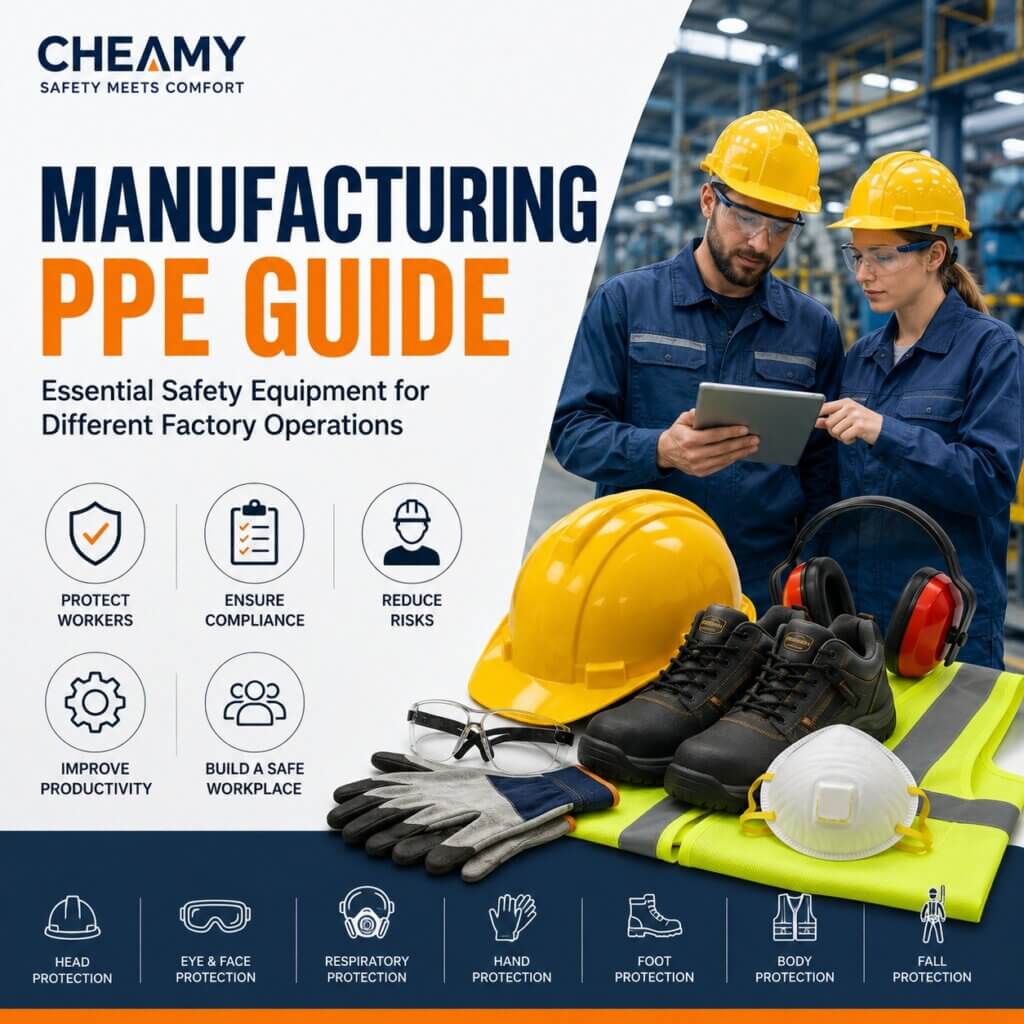
Manufacturing environments involve a wide range of workplace hazards, from sharp metal edges and machinery risks to sparks, heat, and static electricity.
Selecting the right manufacturing PPE is essential for protecting workers, improving workplace safety, and ensuring compliance with industry requirements.
Unlike general workplace protection, factory safety equipment should be selected based on specific job tasks and operational risks.
This guide explains the key PPE requirements for common manufacturing processes, including metal processing, assembly lines, and welding operations.
Why PPE Is Important in Manufacturing
Factories often involve:
- Heavy machinery
- Automated production lines
- Metal components
- Electrical equipment
- High-temperature processes
- Chemical materials
Workers in different positions may face different hazards.
For example:
- A metal worker may need cut protection and eye protection.
- An assembly worker may require anti-static protection.
- A welder needs protection against heat, sparks, and radiation.
Therefore, a one-size-fits-all PPE solution is usually not suitable for modern manufacturing environments.
A proper PPE program should match:
Workplace hazards + Job requirements + Protection standards
1. PPE for Metal Processing
- Sharp metal edges
- Flying particles
- Abrasion
- Impact injuries
- Machine-related hazards
Workers in metal processing usually require:
Cut Resistant Gloves
Cut-resistant gloves are essential when handling:
- Metal sheets
- Sharp components
- Machined parts
- Finished metal products
Important features include:
- High cut resistance level
- Good grip performance
- Wear resistance
- Comfortable fit
Common applications:
- Metal fabrication
- Mechanical processing
- Assembly operations
Relevant standard:
- EN 388 – Protective gloves against mechanical risks
Safety Glasses
Metal processing can produce:
- Metal chips
- Dust
- Sparks
- Flying particles
Safety glasses help protect workers from eye injuries.
Key features:
- Impact-resistant lenses
- Clear vision
- Comfortable wearing design
- Anti-fog coating (if required)
For high-risk operations such as grinding, additional face protection may be required.
Additional PPE for Metal Processing
Depending on the operation, workers may also need:
- Safety helmets
- Hearing protection
- Protective clothing
- Safety shoes
2. PPE for Assembly Line Workers
- Electronics manufacturing
- Automotive production
- Machinery assembly
- Precision equipment manufacturing
Typical risks include:
- Static electricity
- Small component damage
- Foot injuries
- Repetitive handling tasks
Recommended PPE includes:
Anti-Static Gloves
Anti-static gloves help reduce the risk of electrostatic discharge (ESD).
They are commonly used in:
- Electronics assembly
- Semiconductor production
- Precision manufacturing
Key features:
- Static control performance
- Finger flexibility
- Comfortable fit
- Low particle generation
Safety Shoes
Safety shoes protect workers from:
- Falling objects
- Heavy components
- Workplace impact risks
Important features:
- Protective toe cap
- Slip-resistant outsole
- Comfortable support
- Lightweight design
Common standards:
- EN ISO 20345 – Safety footwear
- ASTM F2413 – Protective footwear
For assembly environments, lightweight and comfortable safety shoes are often preferred because workers may stand or walk for long periods.
Additional PPE for Assembly Operations
Depending on the factory environment:
- Safety glasses
- Work gloves
- Protective clothing
- ESD clothing
may also be required.
3. PPE for Welding Operations
Workers may be exposed to:
- High temperatures
- Sparks
- Molten metal
- UV and infrared radiation
- Fire hazards
Proper welding PPE is essential.
Welding Helmet
A welding helmet protects workers from:
- Arc radiation
- Sparks
- Flying particles
- Intense light
Important features:
- Suitable shade level
- Impact-resistant lens
- Comfortable headgear
- Adjustable fit
Different welding processes may require different lens protection levels.
Flame Resistant (FR) Clothing
FR clothing helps protect workers from:
- Heat exposure
- Sparks
- Flame hazards
Common applications:
- Welding workshops
- Metal fabrication
- High-temperature environments
Important features:
- Flame-resistant fabric
- Durable stitching
- Comfortable movement
- Proper sizing
Common standards include:
- EN ISO 11612 – Clothing for heat and flame protection
- IEC 61482 – Arc flash protective clothing
Additional Welding PPE
Welders may also require:
- Welding gloves
- Safety boots
- Face protection
- Respiratory protection
- Hearing protection
How to Choose the Right Manufacturing PPE
When selecting factory safety equipment, companies should consider:
1. Workplace Hazards
Identify:
- Mechanical risks
- Electrical risks
- Heat exposure
- Chemical exposure
- Dust and particles
2. Worker Tasks
Different jobs require different protection levels.
For example:
| Job Position | Recommended PPE |
|---|---|
| Metal processing worker | Cut-resistant gloves, safety glasses, safety shoes |
| Assembly line worker | Anti-static gloves, safety shoes, ESD protection |
| Welder | Welding helmet, FR clothing, welding gloves |
3. Compliance Requirements
Confirm that PPE meets relevant standards:
- EN standards
- ANSI standards
- ISO requirements
Manufacturing PPE Checklist
Before implementing factory safety equipment, confirm:
☐ Workplace hazards identified
☐ PPE requirements defined by job position
☐ Suitable standards confirmed
☐ Product samples tested
☐ Worker comfort considered
☐ Quality inspection completed
Conclusion
Manufacturing environments require different PPE solutions depending on the production process. Metal processing workers need protection against cuts and flying particles, assembly workers require static control and comfortable footwear, while welders need protection from heat, sparks, and radiation.
Choosing the right manufacturing PPE is not only about meeting safety requirements but also about improving worker comfort, productivity, and long-term workplace safety.
At CHEAMY PPE, we help global customers source reliable factory safety equipment for different manufacturing applications, providing professional product selection, quality coordination, and supply chain support.