Skip to content
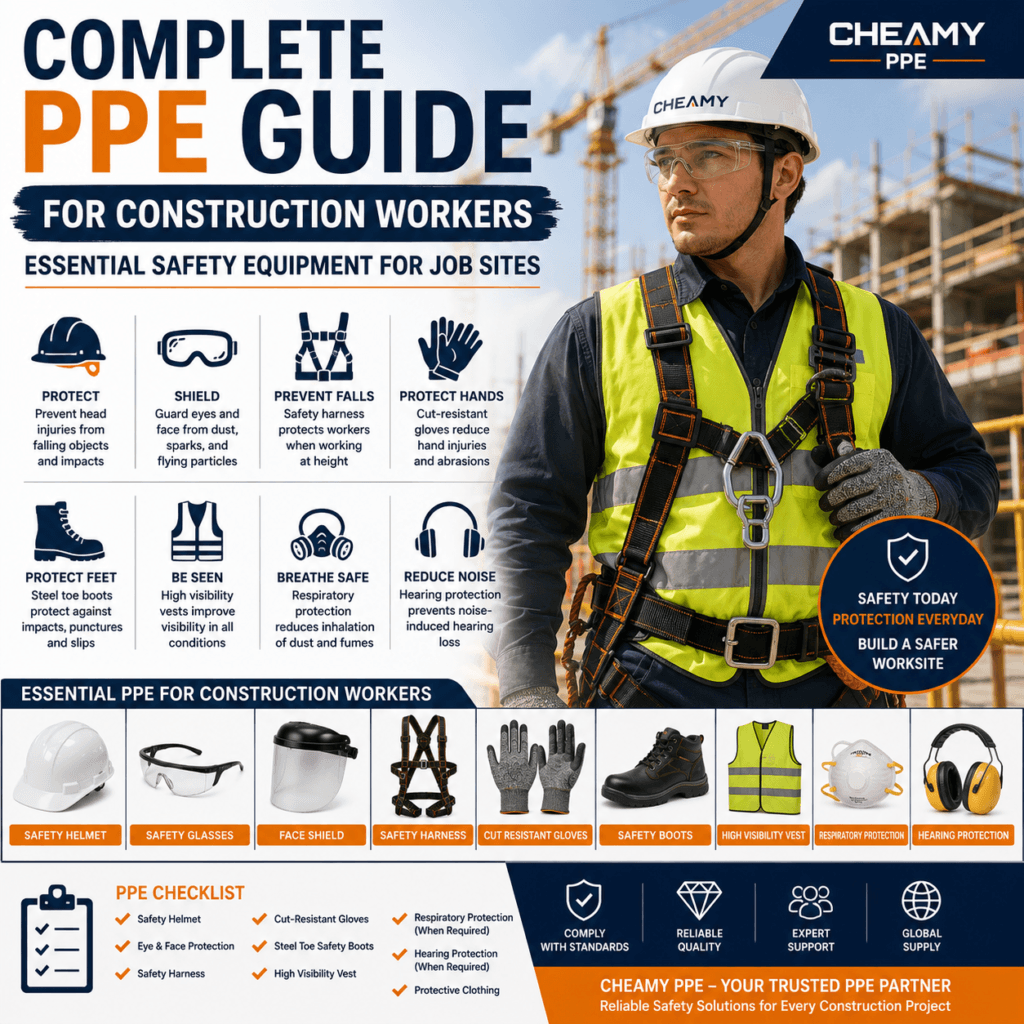
Construction sites involve various hazards, including falling objects, sharp materials, electrical risks, dust, noise, and working at height. Wearing the right construction PPE is essential to protect workers and reduce workplace accidents.
For construction companies, contractors, and project managers, selecting suitable PPE for construction workers requires understanding the risks of each task and choosing equipment that provides the right level of protection.
This complete guide covers the most important PPE categories used in construction environments.
Why PPE Is Important in Construction
Construction workers often operate in challenging conditions, including:
- Heavy machinery operation
- Working at height
- Handling sharp materials
- Exposure to dust and debris
- Outdoor environments
- Electrical and mechanical hazards
The right PPE helps protect workers from injuries while improving safety awareness on job sites.
A complete construction PPE program usually includes:
- Head protection
- Eye and face protection
- Fall protection
- Hand protection
- Foot protection
- High-visibility clothing
- Respiratory protection
- Protective workwear
1. Head Protection: Safety Helmets
It protects against:
- Falling objects
- Impact hazards
- Flying debris
- Electrical risks (depending on helmet type)
When selecting a construction safety helmet, consider:
Key Features
- Impact resistance
- Comfortable fit
- Adjustable suspension system
- Ventilation design
- Compatibility with accessories
Common standards include:
- EN 397 – Industrial safety helmets
- ANSI Z89.1 – Industrial head protection
For different construction environments, workers may also require helmets with:
- Face shields
- Ear protection attachments
- Chin straps
- Reflective elements
2. Eye and Face Protection: Face Shields and Safety Glasses
Construction activities such as cutting, grinding, welding, and drilling can create risks from:
- Flying particles
- Sparks
- Dust
- Chemical splashes
Face and eye protection helps prevent injuries caused by these hazards.
Common options include:
Safety Glasses
Suitable for:
- General construction work
- Dust protection
- Impact protection
Face Shields
Suitable for:
- Grinding operations
- Welding applications
- Chemical handling
When selecting face protection, check:
- Lens quality
- Impact resistance
- Comfort
- Compatibility with other PPE
3. Fall Protection: Safety Harnesses
Working at height is one of the highest-risk activities in construction.
Fall protection equipment helps prevent serious injuries from falls.
A safety harness is commonly used for:
- Building construction
- Roofing work
- Tower maintenance
- Steel structure installation
Important features include:
- Strong webbing material
- Secure buckles
- Comfortable design
- Adjustable straps
- Certified attachment points
Before use, workers should inspect harnesses regularly for:
- Damaged straps
- Broken stitching
- Worn components
- Deformed hardware
Proper training and correct usage are essential because even high-quality fall protection equipment requires correct handling.
4. Hand Protection: Cut Resistant Gloves
Hands are frequently exposed to risks during construction work.
Workers may face:
- Sharp metal edges
- Glass fragments
- Abrasion
- Impact hazards
- Rough materials
Cut-resistant gloves help protect hands while maintaining flexibility and grip.
Common applications include:
- Metal fabrication
- Construction installation
- Material handling
- Maintenance work
When choosing construction gloves, consider:
- Cut resistance level
- Grip performance
- Durability
- Comfort
- Dexterity
Common glove standards include:
- EN ISO 21420 – General glove requirements
- EN 388 – Mechanical protection
Different tasks require different protection levels, so glove selection should match the specific workplace risks.
5. Foot Protection: Steel Toe Boots
- Falling objects
- Heavy equipment impact
- Sharp objects
- Slipping hazards
Steel toe boots are widely used in construction because they provide strong toe protection.
Important features include:
- Steel toe cap
- Slip-resistant outsole
- Puncture-resistant midsole
- Water resistance
- Comfortable support
Common standards:
- EN ISO 20345 – Safety footwear
- ASTM F2413 – Protective footwear
The right safety boots should provide protection without limiting worker mobility and comfort.
6. Visibility Protection: High Visibility Vests
Construction workers often work near:
- Vehicles
- Cranes
- Heavy machinery
- Roadside areas
High visibility vests help workers remain visible in different lighting conditions.
Benefits include:
- Improved worker visibility
- Reduced collision risks
- Better safety management
When selecting high visibility clothing, consider:
- Reflective tape quality
- Fabric durability
- Comfort
- Weather conditions
Common standards:
- EN ISO 20471 – High visibility clothing
- ANSI/ISEA 107 – High visibility safety apparel
High visibility vests are especially important for workers in transportation, road construction, and large construction projects.
7. Additional PPE for Construction Workers
Depending on the working environment, construction workers may also need:
Respiratory Protection
For protection against:
- Dust
- Concrete particles
- Hazardous substances
Examples:
- Disposable respirators
- Half-face respirators
- Full-face masks
Hearing Protection
For areas with high noise levels:
- Earplugs
- Earmuffs
Protective Clothing
For:
- Weather protection
- Welding work
- Chemical exposure
- General site protection
Construction PPE Checklist
Before starting work, construction companies should ensure workers have:
☐ Safety helmet
☐ Eye and face protection
☐ Safety harness for working at height
☐ Cut-resistant gloves
☐ Steel toe safety boots
☐ High visibility vest
☐ Respiratory protection when required
☐ Hearing protection when required
☐ Suitable protective clothing
How to Choose the Right Construction PPE
The best PPE selection depends on:
- Job tasks
- Workplace hazards
- Industry requirements
- Local regulations
- Worker comfort
Poorly selected PPE may reduce protection effectiveness or discourage workers from wearing it.
A successful PPE program balances:
Safety + Protection + Comfort + Compliance
Conclusion
Construction PPE plays a critical role in protecting workers from common job-site hazards. From safety helmets and face shields to fall protection, gloves, safety boots, and high visibility vests, each product serves a specific protective purpose.
For construction companies and international buyers, choosing reliable PPE suppliers and maintaining consistent product quality are essential parts of workplace safety management.
At CHEAMY PPE, we provide a wide range of construction safety equipment, helping global customers source reliable PPE solutions for different working environments — with professional support from product selection to shipment coordination.