Skip to content
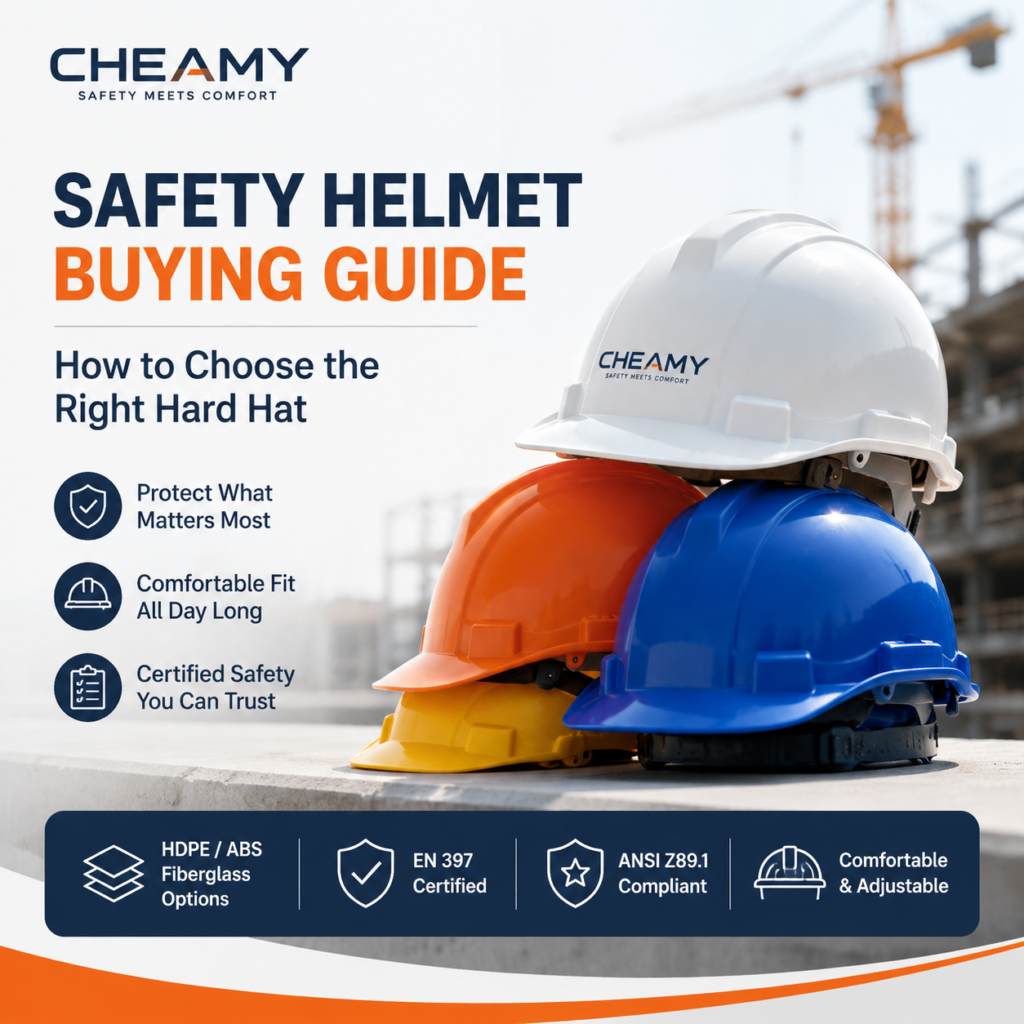
Head injuries remain one of the leading causes of serious workplace accidents in construction, manufacturing, mining, utilities, and heavy industry. Falling objects, flying debris, electrical hazards, and accidental impacts can all result in severe injuries without proper head protection.
Choosing the right industrial safety helmet is essential for protecting workers and complying with workplace safety regulations. However, with different materials, suspension systems, and international standards available, selecting the right hard hat can be challenging.
This safety helmet buying guide explains the most common helmet materials, compares their advantages, introduces EN 397 and ANSI Z89.1 standards, and provides practical advice for choosing the right hard hat for different working environments.
Why Is a Safety Helmet Important?
A safety helmet is designed to absorb impact energy and reduce the risk of head injuries caused by falling or moving objects. Depending on the application, modern hard hats may also provide electrical insulation, penetration resistance, and enhanced durability.
Using the correct safety helmet helps:
- Protect workers from head injuries
- Reduce workplace accidents
- Improve compliance with safety regulations
- Increase confidence and productivity
- Support long-term occupational safety
Common Workplace Head Hazards
Before selecting a hard hat, identify the potential hazards in your work environment.
Common head hazards include:
- Falling tools and materials
- Flying debris
- Low overhead obstacles
- Electrical contact
- Construction equipment
- Impact from moving machinery
The type of hazard determines the level of protection required.
Safety Helmet Materials Comparison
The material of a safety helmet directly affects its weight, durability, impact resistance, and working environment suitability.
HDPE Safety Helmets
High-Density Polyethylene (HDPE) is the most widely used material for industrial safety helmets.
Advantages
- Lightweight
- Cost-effective
- Excellent impact resistance
- Comfortable for long-term wear
- Resistant to moisture and many chemicals
Suitable Applications
- Construction
- Warehousing
- Manufacturing
- General industrial work
HDPE helmets are an excellent choice for everyday industrial applications.
ABS Safety Helmets
Acrylonitrile Butadiene Styrene (ABS) provides improved strength and a smoother finish compared with HDPE.
Advantages
- Higher rigidity
- Better appearance
- Good impact resistance
- Enhanced durability
- Better temperature resistance
Suitable Applications
- Manufacturing
- Engineering
- Utilities
- Industrial maintenance
ABS helmets are often selected where durability and aesthetics are equally important.
Fiberglass Safety Helmets
Fiberglass hard hats are designed for demanding industrial environments requiring exceptional durability and heat resistance.
Advantages
- Excellent heat resistance
- Superior durability
- Long service life
- Suitable for harsh environments
Suitable Applications
- Welding
- Metal processing
- Oil & gas
- High-temperature industries
- Heavy industrial operations
Fiberglass helmets are ideal for challenging environments where standard plastic helmets may not perform as well.
Safety Helmet Standards
Selecting a certified helmet ensures reliable protection and compliance with international safety requirements.
EN 397
EN 397 is the primary European standard for industrial safety helmets.
It specifies requirements for:
- Shock absorption
- Penetration resistance
- Chin strap performance
- Flame resistance
Optional performance tests include:
- Low-temperature resistance
- High-temperature resistance
- Electrical insulation
- Lateral deformation
EN 397 helmets are widely used across Europe and many international markets.
ANSI Z89.1
ANSI Z89.1 is the leading safety helmet standard in North America.
It classifies helmets by:
Helmet Type
- Type I – Protection against impacts to the top of the head
- Type II – Protection against impacts to the top and sides of the head
Electrical Class
- Class G – General electrical protection
- Class E – Electrical protection for higher-voltage environments
- Class C – Conductive helmets with no electrical protection
ANSI-certified hard hats are commonly used in construction, utilities, manufacturing, and infrastructure projects.
How to Choose the Right Hard Hat
When selecting an industrial safety helmet, consider the following factors.
Workplace Hazards
Identify whether workers face:
- Falling objects
- Electrical risks
- High temperatures
- Confined spaces
- Outdoor weather exposure
Helmet Material
Choose the material based on the working environment:
| Material | Best For |
|---|---|
| HDPE | General industrial use |
| ABS | Engineering and manufacturing |
| Fiberglass | High heat and demanding environments |
Safety Standards
Always select helmets certified to the standards required in your market:
- EN 397
- ANSI Z89.1
Comfort and Fit
A comfortable helmet is more likely to be worn correctly.
Look for features such as:
- Adjustable suspension
- Ratchet headband
- Ventilation (where appropriate)
- Sweatband
- Lightweight shell
Proper fit improves both comfort and protection.
Applications Across Different Industries
Construction
Recommended:
- HDPE safety helmets
- EN 397 or ANSI Z89.1 certified
Manufacturing
Recommended:
- ABS safety helmets
- Lightweight industrial helmets
Utilities & Electrical Work
Recommended:
- Electrical-rated hard hats
- ANSI Class G or Class E helmets
Heavy Industry
Recommended:
- Fiberglass safety helmets
- High-temperature resistant helmets
Common Mistakes When Buying Safety Helmets
Avoid these common purchasing mistakes:
- Choosing helmets based only on price
- Ignoring certification requirements
- Selecting the wrong helmet material
- Wearing damaged or expired helmets
- Failing to adjust the suspension properly
- Not replacing helmets after significant impact
A properly selected and maintained hard hat provides the best level of head protection.
Why Choose CHEAMY Safety Helmets?
CHEAMY offers a comprehensive range of industrial safety helmets designed to meet the needs of construction, manufacturing, engineering, utilities, and heavy industry.
Our head protection solutions include:
- HDPE Safety Helmets
- ABS Safety Helmets
- Fiberglass Hard Hats
- Vented Safety Helmets
- Ratchet Suspension Helmets
- Custom Logo & OEM Solutions
All CHEAMY helmets are designed with a focus on safety, comfort, durability, and international compliance.
Safety Meets Comfort — Reliable Head Protection for Every Workplace.
Conclusion
Choosing the right industrial safety helmet is essential for protecting workers from workplace hazards.
By understanding helmet materials, comparing HDPE, ABS, and fiberglass options, and selecting products certified to EN 397 and ANSI Z89.1, companies can improve workplace safety, reduce injuries, and ensure long-term compliance.
The right hard hat is more than protective equipment—it is a critical investment in worker safety and operational success.