Safety footwear is one of the most important forms of Personal Protective Equipment (PPE) in industrial workplaces. From construction sites to manufacturing plants and logistics centers, workers face daily risks from falling objects, sharp materials, slippery surfaces, and heavy equipment.
Selecting the right safety shoes helps reduce foot injuries, improve comfort, and ensure compliance with workplace safety standards. However, one of the most common questions buyers ask is whether to choose steel toe shoes or composite toe safety shoes.
Both offer excellent protection, but they differ in weight, material, and workplace suitability.
This guide compares their key features, advantages, and applications to help you choose the best industrial safety footwear.
Why Are Safety Shoes Important?
Industrial safety shoes are designed to protect workers from a variety of workplace hazards, including:
- Falling tools and materials
- Compression injuries
- Sharp objects
- Slippery surfaces
- Electrical hazards
- Long hours of standing and walking
Modern safety shoes combine certified toe protection with comfort, slip resistance, and durability to support workers throughout the day.
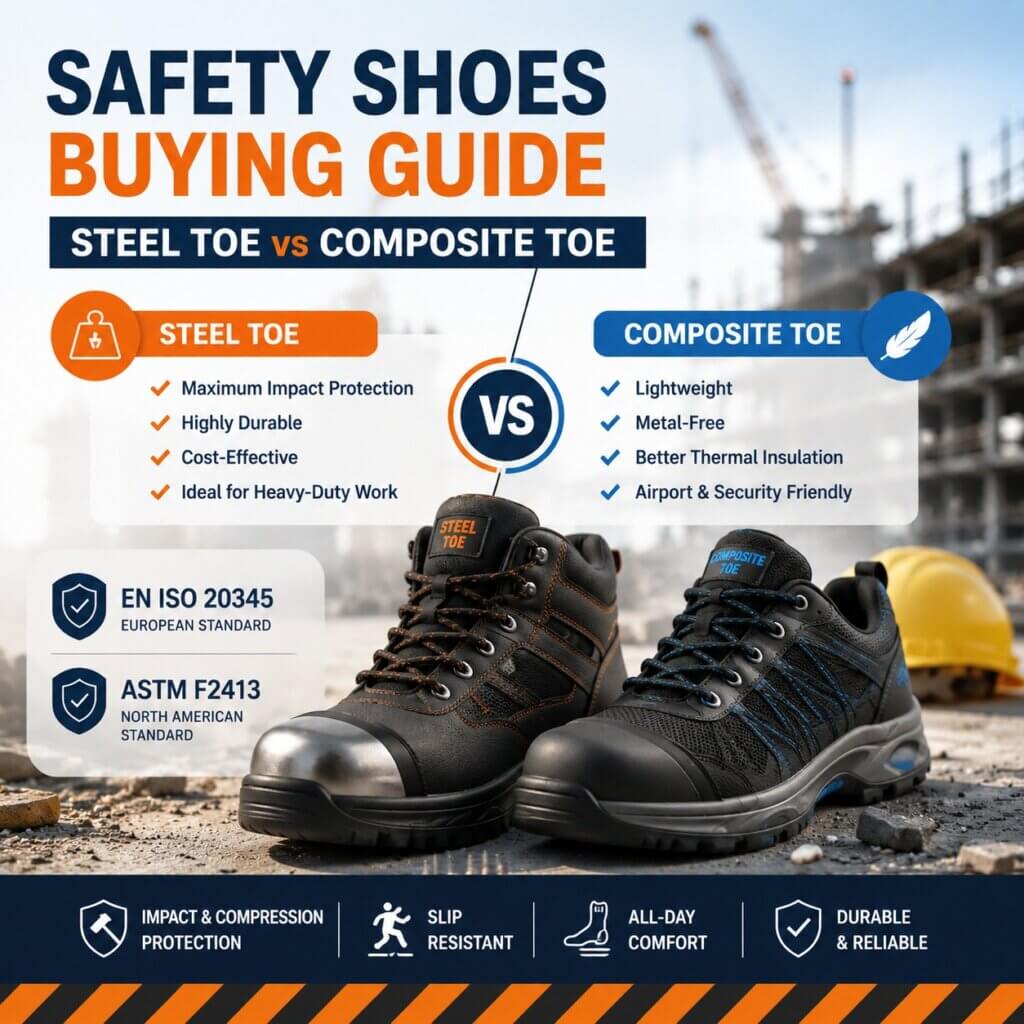
Steel Toe Shoes vs Composite Toe Safety Shoes
The primary difference lies in the material used for the protective toe cap.
| Feature | Steel Toe Shoes | Composite Toe Safety Shoes |
|---|---|---|
| Toe Protection | High | High |
| Weight | Heavier | Lighter |
| Metal Detection | Yes | No |
| Electrical Conductivity | Conductive | Non-metallic |
| Thermal Insulation | Lower | Better |
| Comfort for Long Wear | Good | Excellent |
| Airport & Security Friendly | No | Yes |
| Typical Cost | More economical | Usually higher |
Both types can meet the same safety certification requirements when properly tested.
Steel Toe Shoes
Steel toe shoes use a reinforced steel cap to protect the toes from impact and compression.
Advantages
- Excellent impact resistance
- Outstanding compression protection
- Highly durable
- Cost-effective
- Suitable for heavy-duty work
Best Applications
- Construction
- Manufacturing
- Warehousing
- Mining
- Heavy industry
Steel toe footwear remains the preferred option for workplaces where maximum mechanical protection is required.
Composite Toe Safety Shoes
Composite toe shoes use non-metallic materials such as fiberglass, carbon fiber, Kevlar®, or reinforced plastics instead of steel.
Advantages
- Lightweight
- Metal-free construction
- Better thermal insulation
- Comfortable for extended wear
- Ideal for security-sensitive environments
Best Applications
- Electrical work
- Airports
- Logistics
- Food processing
- Pharmaceutical manufacturing
- Electronics
Composite toe footwear is especially popular where workers pass through metal detectors or require lighter footwear for long shifts.
How to Choose the Right Safety Shoes
When selecting safety footwear, consider the following factors.
Workplace Hazards
Identify whether workers face:
- Falling objects
- Heavy machinery
- Sharp materials
- Wet or oily surfaces
- Electrical risks
- Temperature extremes
The level of protection required should match the workplace hazards.
Comfort
Workers often wear safety shoes for 8–12 hours each day.
Look for features such as:
- Lightweight construction
- Breathable lining
- Cushioned insole
- Shock-absorbing heel
- Ergonomic design
Comfort improves productivity and encourages consistent PPE use.
Work Environment
Different workplaces require different footwear.
Steel Toe Shoes
Recommended for:
- Construction
- Heavy manufacturing
- Mining
- Engineering projects
Composite Toe Safety Shoes
Recommended for:
- Electrical maintenance
- Logistics
- Warehousing
- Pharmaceutical facilities
- Clean manufacturing
Safety Standards
Always choose certified safety footwear.
For European markets, look for:
- EN ISO 20345
For North American markets, look for:
- ASTM F2413
Certified footwear ensures the required impact and compression protection has been independently tested.
Common Buying Mistakes
Avoid these common mistakes:
- Choosing shoes based only on price
- Ignoring workplace hazards
- Wearing the wrong size
- Overlooking slip resistance
- Forgetting to replace worn footwear
- Buying uncertified products
Selecting the right safety shoes improves both worker protection and long-term value.
Why Choose CHEAMY Safety Footwear?
CHEAMY offers a comprehensive range of industrial safety footwear designed for demanding workplaces.
Our product range includes:
- Steel Toe Shoes
- Composite Toe Safety Shoes
- Safety Boots
- Slip-Resistant Footwear
- Lightweight Safety Shoes
- Waterproof Safety Boots
Designed with safety, comfort, and durability in mind, CHEAMY footwear helps protect workers across construction, manufacturing, logistics, engineering, and industrial applications.
Safety Meets Comfort — Every Step Protected.
Conclusion
Both steel toe shoes and composite toe safety shoes provide excellent protection when selected for the correct application.
Steel toe footwear is ideal for heavy-duty environments requiring maximum durability and impact resistance, while composite toe safety shoes offer lightweight comfort, non-metallic construction, and improved thermal insulation for specialized workplaces.
By understanding workplace hazards, comparing toe cap materials, and selecting certified safety footwear, businesses can improve worker safety, comfort, and compliance.