Skip to content
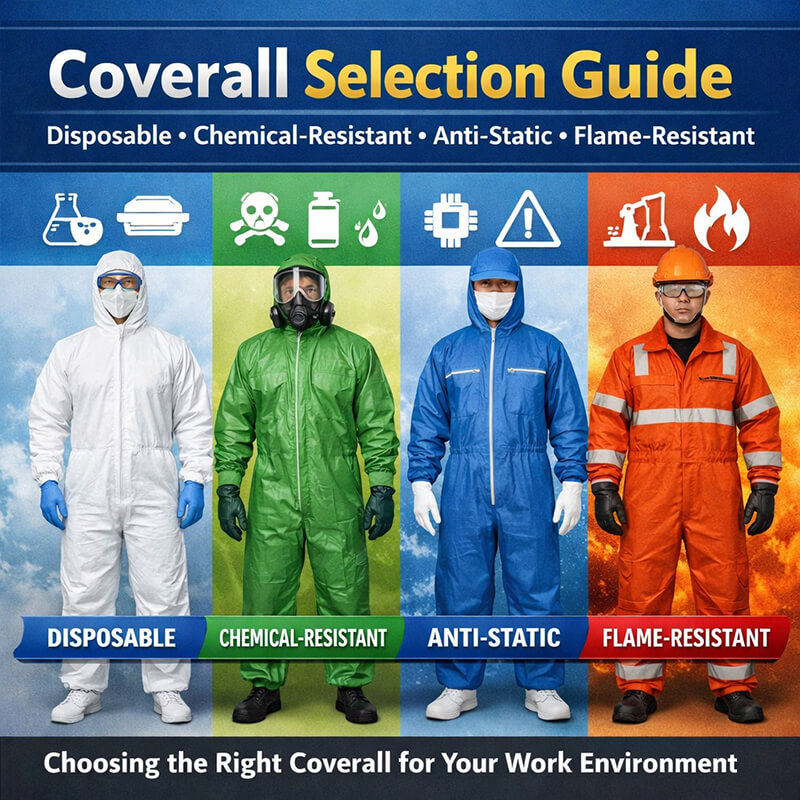
Discover the right coverall for your work environment. From disposable protection to flame-resistant suits, learn how to select coveralls that keep you safe and comfortable on the job.
1. Why Coveralls Matter
Coveralls are a fundamental piece of personal protective equipment (PPE). They protect the body from chemical splashes, dust, heat, sparks, and other workplace hazards. Selecting the right type of coverall is crucial for workplace safety and compliance.
2. Disposable Coveralls
-
Materials: PP non-woven fabric, SMS composite materials
-
Work Environments: Laboratories, cleanrooms, food processing, general dust protection
-
Features: Lightweight, cost-effective, single-use to prevent cross-contamination
-
Precautions: Not suitable for prolonged or repeated use; limited protection; may tear easily
3. Chemical-Resistant Coveralls
-
Materials: PVC, PE, Tyvek, chemical-resistant composites
-
Work Environments: Chemical plants, painting operations, hazardous liquid handling
-
Features: Resists chemical splashes and corrosion, provides effective chemical barrier
-
Precautions: Ensure cuffs and ankles are sealed; inspect for damage before use
4. Anti-Static Coveralls
-
Materials: Conductive fiber blends, polyester-cotton anti-static fabrics
-
Work Environments: Electronics manufacturing, precision equipment rooms, explosion-proof areas
-
Features: Prevents static buildup, protecting sensitive electronic components and reducing fire hazards
-
Precautions: Anti-static effectiveness decreases over multiple washes; periodic testing recommended
5. Flame-Resistant Coveralls
-
Materials: Flame-resistant cotton blends, Nomex, FR composites
-
Work Environments: Welding, petrochemical, oil & gas, high-temperature operations
-
Features: Resistant to ignition, provides protection against burns
-
Precautions: Avoid wearing untreated clothing underneath; follow care instructions to maintain flame resistance
6. Coverall Selection Tips
-
Match coverall type to workplace hazards: chemical exposure → chemical-resistant, high heat → flame-resistant, electronics → anti-static
-
Consider comfort and mobility for frequent movements
-
Refer to fabric weight for durability and breathability, as discussed in our previous post
7. Conclusion
Selecting the right coverall is essential for safety, comfort, and productivity. From disposable to high-performance flame-resistant coveralls, each type has a defined application. Choose wisely to ensure safety first in any work environment.