Skip to content
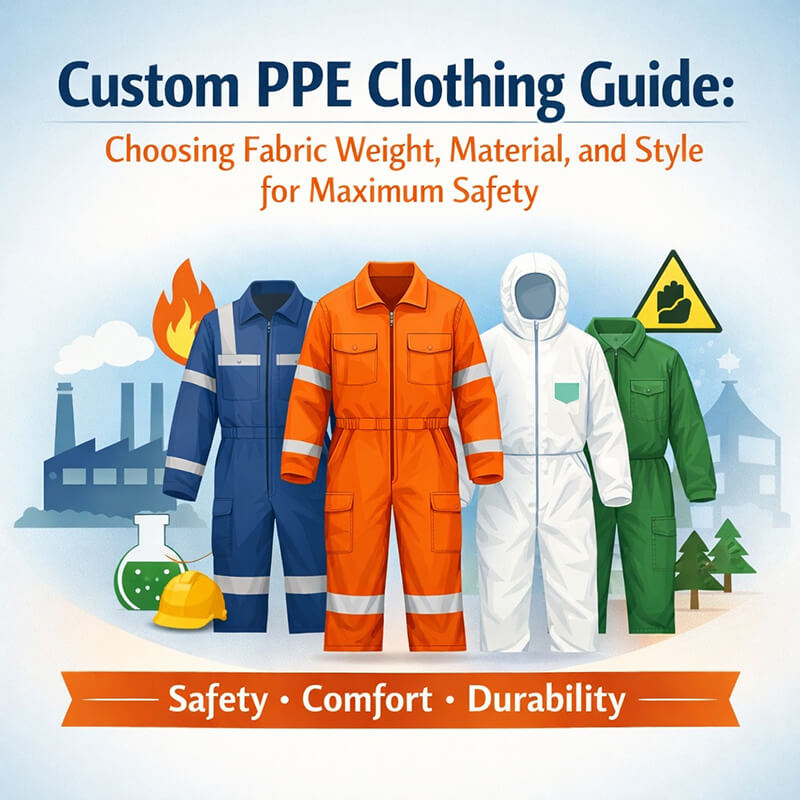
This guide explains how to choose custom PPE clothing by fabric weight, material, and style, helping you balance safety, comfort, and durability for various work environments.
1. Why Custom PPE Matters
Standard PPE may not meet the unique needs of every workplace. Custom PPE allows companies to design protective clothing tailored to specific tasks and hazards, enhancing safety, comfort, and efficiency for employees.
2. Material Selection Guide
Different work environments require different fabrics:
-
Polyester-Cotton Blends: Durable and breathable, suitable for general operations, warehouses, and assembly lines
-
Flame-Resistant Fabrics: Ideal for welding, petrochemical, and high-temperature work
-
Chemical-Resistant Fabrics (PVC, PE, Tyvek): Protect against chemical spills, spray painting, and hazardous liquid handling
-
Anti-Static Fabrics: Essential for electronics manufacturing, explosion-proof areas, and precision equipment operations
💡 Tip: Choose materials based on the hazard level of the workplace to ensure both protection and comfort.
3. Fabric Weight (GSM) Guide
The weight of the fabric affects thickness, durability, and breathability:
-
Lightweight (150–180 g/m²): Suitable for light indoor work or short-duration use
-
Medium Weight (200–220 g/m²): Versatile and commonly used for most work environments
-
Heavyweight (230–260 g/m²): High durability, abrasion resistance, and insulation for heavy-duty or outdoor tasks
💡 Tip: Higher fabric weight increases durability but reduces breathability. Balance safety and comfort.
4. Style and Design Guide
Customization also includes design and functional features:
-
Coveralls vs. Two-Piece Suits: Coveralls offer full-body protection for chemical, fire, or cleanroom work; two-piece suits provide flexibility for general factory or warehouse use
-
Reflective Strips / Visibility Markings: Enhance visibility for nighttime or traffic-related work
-
Pockets and Tool Storage: Convenient for carrying tools and equipment
-
Hood, Cuffs, and Ankles: Adjustable or sealed depending on the working environment
💡 Tip: Style should match the tasks performed to avoid restricting movement or causing heat stress.
5. Customization Process
-
Assess Workplace Hazards: Determine if fire, chemical, or anti-static protection is needed
-
Select Fabric and Weight: Based on task intensity and environment conditions
-
Design Style and Features: Add reflective strips, tool pockets, adjustable cuffs, etc.
-
Sample Confirmation: Test sample garments for fit, comfort, and protection before bulk production
6. Conclusion
Custom PPE clothing is a balance of fabric, weight, and style. Properly chosen, it ensures safety, comfort, and durability, enabling employees to work efficiently and safely in any environment.