Skip to content
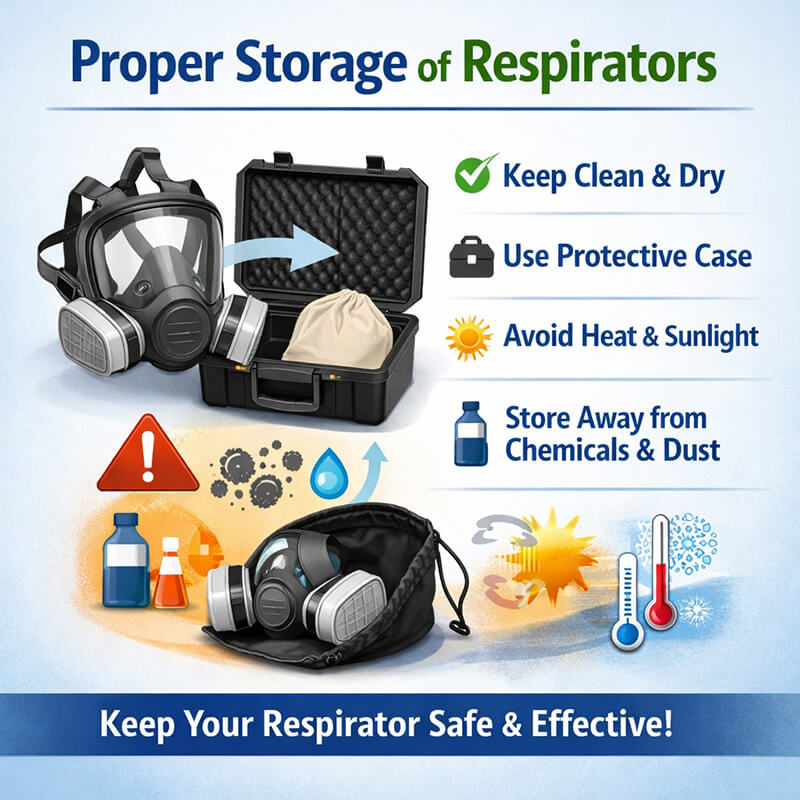
Proper storage of respirators is essential to maintain their effectiveness and longevity. Learn best practices for cleaning, storing, and protecting your PPE to ensure consistent workplace safety.
Why Proper Storage Matters
Even high-quality respirators can lose effectiveness if stored improperly. Poor storage can lead to:
-
Deformation of facepieces
-
Contamination from dust, chemicals, or microbes
-
Damage to straps, valves, or filters
Proper storage ensures that your respirator remains functional, safe, and ready for use.
Best Practices for Storing Respirators
1. Clean Before Storing
-
Remove filters or cartridges
-
Wash the facepiece with mild detergent and warm water
-
Dry completely before storage to prevent mold or bacteria growth
2. Use a Protective Case or Bag
-
Store in a dedicated, clean container to prevent deformation or damage
-
Avoid stacking or placing heavy objects on top
3. Keep Away from Contaminants
-
Store respirators away from chemicals, dust, moisture, and direct sunlight
-
Ensure ventilated storage to maintain material integrity
4. Avoid Extreme Temperatures
-
Prolonged heat can deform plastic and rubber parts
-
Extreme cold can stiffen sealing materials, reducing fit
5. Check Periodically
-
Inspect straps, valves, and facepiece for wear or damage
-
Replace filters or cartridges as needed
Key Takeaways
-
Proper storage protects respirators from damage and contamination
-
Always clean, dry, and store in a safe, ventilated area
-
Inspect components regularly to maintain full effectiveness
-
Follow manufacturer guidelines for long-term PPE safety
For additional insights, please see the following articles:
→ Cleaning and Maintaining Your Respirator
→ Respirator Safety: Common Mistakes When Using Respirators and How to Avoid Them