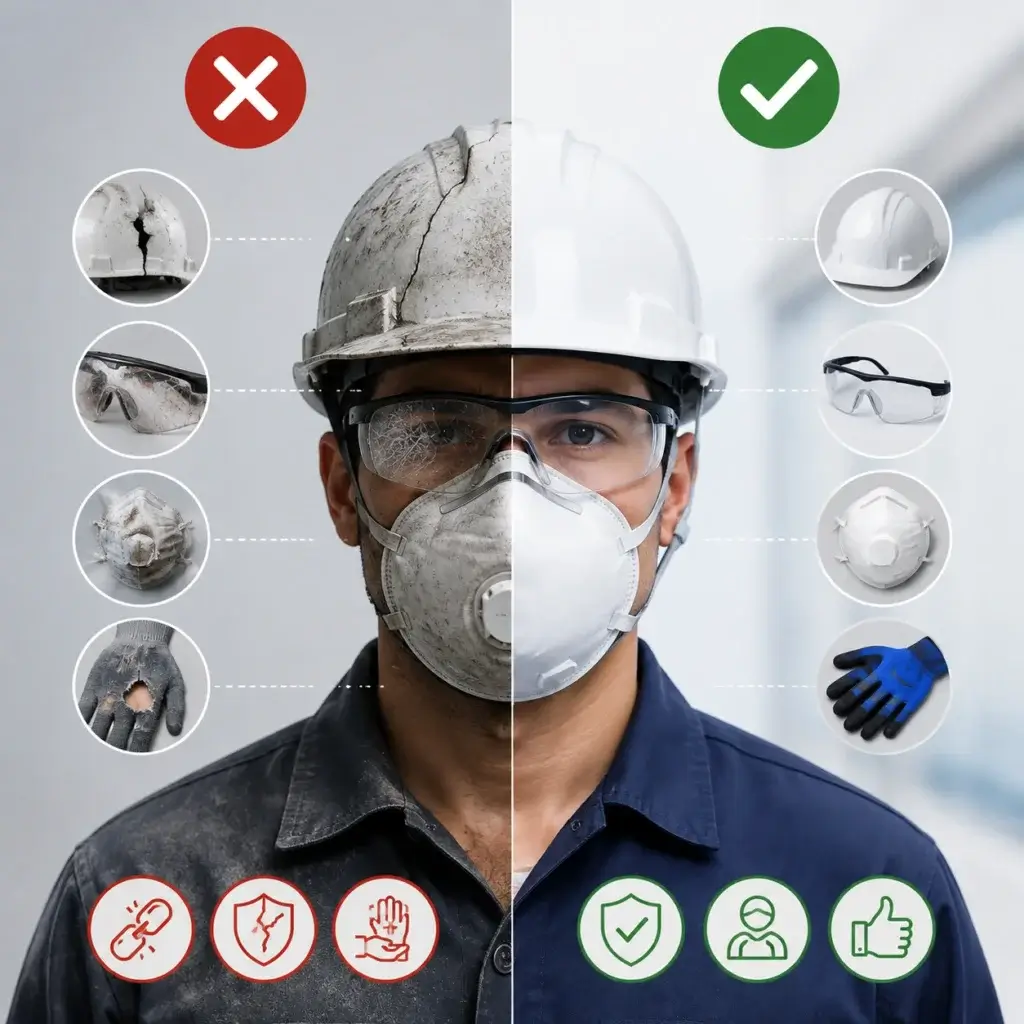
Personal Protective Equipment (PPE) is designed to reduce the risk of workplace injuries, but simply wearing PPE does not guarantee protection. Every year, workplace incidents occur because protective equipment is used incorrectly, poorly maintained, damaged, or unsuitable for the hazards involved.
So, why does PPE fail?
In most cases, PPE itself is not the problem. Instead, failure results from poor selection, improper use, lack of maintenance, or insufficient training.
Understanding these common causes can help employers reduce workplace accidents and build a stronger safety culture.
1. Choosing the Wrong PPE
One of the most common reasons PPE fails is that it is not suitable for the hazard.
For example:
- Wearing cut-resistant gloves when chemical-resistant gloves are required
- Using dust masks instead of certified respirators
- Choosing standard work boots instead of electrical hazard footwear
Every workplace hazard requires the appropriate type of protection.
2. Incorrect Fit
PPE must fit properly to provide effective protection.
Examples include:
- Loose respirators that allow contaminated air to leak in
- Oversized gloves that reduce grip and dexterity
- Safety helmets with improperly adjusted suspension systems
- Safety glasses that leave gaps around the eyes
Comfort and correct sizing encourage workers to wear PPE consistently.
3. Damaged Equipment
Even high-quality PPE loses effectiveness once damaged.
Common signs include:
- Cracked helmets
- Torn gloves
- Scratched safety glasses
- Worn shoe soles
- Broken respirator straps
Damaged PPE should be replaced immediately.
4. Poor Maintenance
Reusable PPE requires regular care.
Problems often occur when equipment is:
- Not cleaned properly
- Stored in unsuitable conditions
- Exposed to excessive heat or sunlight
- Used beyond its recommended service life
Proper maintenance helps preserve protective performance.
5. Lack of Worker Training
Providing PPE is only part of the solution.
Workers should understand:
- When PPE is required
- How to wear it correctly
- How to inspect equipment
- How to clean reusable PPE
- When replacement is necessary
Without training, even certified PPE may fail to protect users.
6. Failure to Inspect PPE
A quick inspection before each use can prevent many workplace accidents.
Workers should check for:
- Cracks
- Tears
- Loose straps
- Missing components
- Signs of contamination
Small defects can become major safety risks if ignored.
7. Using Expired PPE
Some PPE has a recommended service life or expiration period.
Examples include:
- Safety helmets
- Respirator filters
- Disposable respirators
- Certain chemical protective products
Using expired equipment may reduce protection even if it appears undamaged.
8. Ignoring Manufacturer Instructions
Manufacturers provide instructions for:
- Proper use
- Cleaning
- Storage
- Inspection
- Replacement
Ignoring these recommendations may shorten PPE lifespan and reduce safety performance.
9. Workplace Conditions Change
Hazards are not always the same.
For example:
- New chemicals are introduced
- Higher temperatures are encountered
- Different machinery is installed
- Work processes change
PPE should be reviewed whenever workplace hazards change.
10. Safety Culture Is Weak
Even the best PPE cannot compensate for poor safety management.
Successful organizations encourage workers to:
- Report damaged PPE
- Replace equipment promptly
- Participate in safety training
- Follow workplace procedures
- Treat PPE as essential—not optional
A strong safety culture significantly reduces PPE-related failures.
How to Prevent PPE Failure
Organizations can improve protection by following these best practices:
- Conduct regular hazard assessments.
- Select PPE appropriate for each task.
- Provide proper employee training.
- Inspect PPE before every use.
- Clean and store reusable equipment correctly.
- Replace damaged or expired PPE immediately.
- Purchase certified PPE from reliable suppliers.
Preventive action is always more effective than reacting to workplace accidents.
Building a Reliable PPE Program
An effective PPE program should include:
- Hazard identification
- PPE selection
- Employee training
- Routine inspections
- Maintenance procedures
- Replacement schedules
- Regular program reviews
When all of these elements work together, PPE performs as intended and helps protect workers every day.
Conclusion
PPE rarely fails because of manufacturing alone. In most cases, failure results from incorrect selection, improper fit, poor maintenance, inadequate training, or delayed replacement.
By understanding why PPE fails and implementing a comprehensive PPE management program, employers can improve workplace safety, reduce injuries, and ensure workers receive the protection they need.