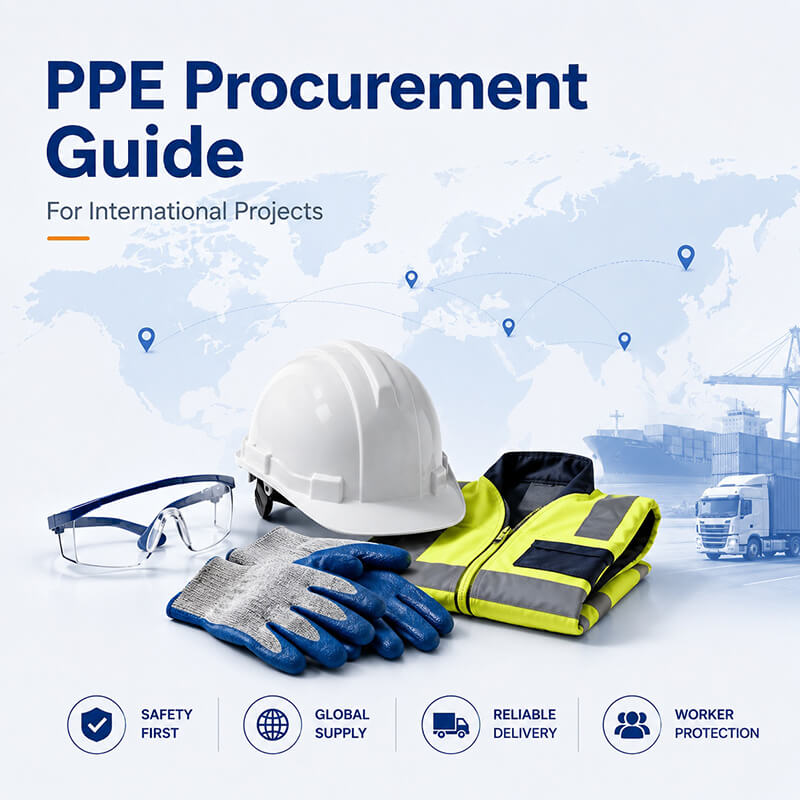
Managing PPE procurement for international projects is far more complex than simply purchasing safety products. Large overseas projects often involve different climates, regulations, logistics systems, and workforce requirements, which means procurement decisions directly affect safety performance, project timelines, and operational costs.
Whether the project involves construction, infrastructure, mining, manufacturing, logistics, or industrial operations, a well-planned PPE procurement strategy helps reduce supply risks and improve long-term efficiency.
This guide outlines the key factors companies should consider when sourcing PPE for international projects.
1. Understand the Project Environment First
Effective PPE procurement starts with understanding where and how the products will be used.
Different project environments create different PPE requirements:
- Hot climate regions require breathable and lightweight PPE
- Cold environments require insulated protective clothing
- Dust-heavy operations need respiratory protection
- Chemical industries require specialized barrier protection
- High-noise sites require hearing protection systems
Before procurement begins, buyers should clearly evaluate:
- Climate conditions
- Site hazards
- Working hours
- Worker mobility needs
- Local safety regulations
Selecting PPE without understanding the real work environment often leads to low worker compliance and unnecessary replacement costs.
2. Choose PPE Based on Compliance Requirements
International projects may involve different certification systems depending on the destination market.
Common standards include:
- EN standards for Europe
- ANSI standards for the United States
- ISO quality management systems
- Industry-specific safety requirements
During PPE procurement, buyers should verify:
- Product certifications
- Test reports
- Compliance validity
- Labeling and packaging requirements
It is also important to confirm whether the products meet local import regulations before shipment.
Compliance problems can create customs delays, project interruptions, or legal risks.
3. Evaluate Supplier Stability Carefully
International projects usually require continuous supply over long periods. Choosing the right supplier is critical.
A reliable supplier should provide:
- Stable production capacity
- Consistent product quality
- Clear communication
- Scalable supply capability
- Experience with international shipments
During PPE procurement, buyers should evaluate whether the supplier can support:
- Repeat orders
- Emergency replenishment
- Customized products
- Multiple product categories
Long-term stability is often more valuable than short-term pricing advantages.
4. Plan Logistics and Delivery Timelines Early
Logistics is one of the biggest challenges in international PPE procurement.
Buyers should consider:
- Production lead times
- Shipping schedules
- Customs clearance
- Local transportation
- Port congestion risks
For large projects, delayed PPE delivery can affect worker deployment and project progress.
Good procurement planning includes:
- Buffer stock preparation
- Flexible shipping arrangements
- Communication with freight forwarders
- Alternative supply strategies during peak seasons
Reliable delivery planning helps reduce operational disruptions.
5. Standardize PPE Across Projects When Possible
Many international companies manage projects in multiple regions. Standardizing PPE procurement can provide several advantages:
- Easier inventory management
- More consistent worker training
- Simplified purchasing processes
- Better pricing through larger order volumes
However, standardization should still allow flexibility for local climate and site conditions.
The goal is to balance operational efficiency with practical worker needs.
6. Consider Worker Comfort and PPE Compliance
In many projects, workers remove PPE because it feels uncomfortable—not because they ignore safety.
This is especially common in:
- High-temperature environments
- Humid regions
- Long working shifts
During PPE procurement, buyers should consider:
- Breathability
- Weight reduction
- Ergonomic design
- Flexibility and comfort
Comfort directly affects PPE compliance rates and overall workplace safety performance.
7. Develop Long-Term Supplier Relationships
International projects often require ongoing procurement support.
Building strong supplier relationships can help:
- Improve communication efficiency
- Stabilize product quality
- Reduce sourcing risks
- Support urgent project needs
- Improve long-term cost control
Reliable suppliers become strategic partners rather than temporary vendors.
This is especially important when managing large or multi-country PPE procurement programs.
8. Prepare for Unexpected Supply Chain Risks
Global supply chains can change quickly due to:
- Shipping delays
- Raw material shortages
- Political instability
- Seasonal demand increases
A strong PPE procurement strategy should include:
- Backup suppliers
- Safety stock planning
- Flexible order scheduling
- Risk management planning
Preparation helps reduce project disruption during uncertain market conditions.
Conclusion
Successful PPE procurement for international projects requires more than purchasing products at competitive prices.
A strong procurement strategy should focus on:
- Project-specific safety needs
- Compliance requirements
- Supplier reliability
- Logistics planning
- Worker comfort
- Long-term supply stability
When PPE procurement is managed strategically, companies can improve worker safety, reduce operational risks, and support smoother international project execution.