Skip to content
PPE Quality Inspection: What Buyers Should Check Before Bulk Orders
When purchasing Personal Protective Equipment (PPE) in large quantities, quality control is one of the most important steps before shipment.
A product may look acceptable from photos or samples, but consistency during mass production is what determines whether the PPE can truly meet safety requirements.
For international buyers, conducting proper PPE quality inspection before a bulk order helps reduce risks related to product defects, inconsistent performance, certification issues, and shipment delays.
This guide explains the key steps of PPE quality control, from sample approval to final inspection.
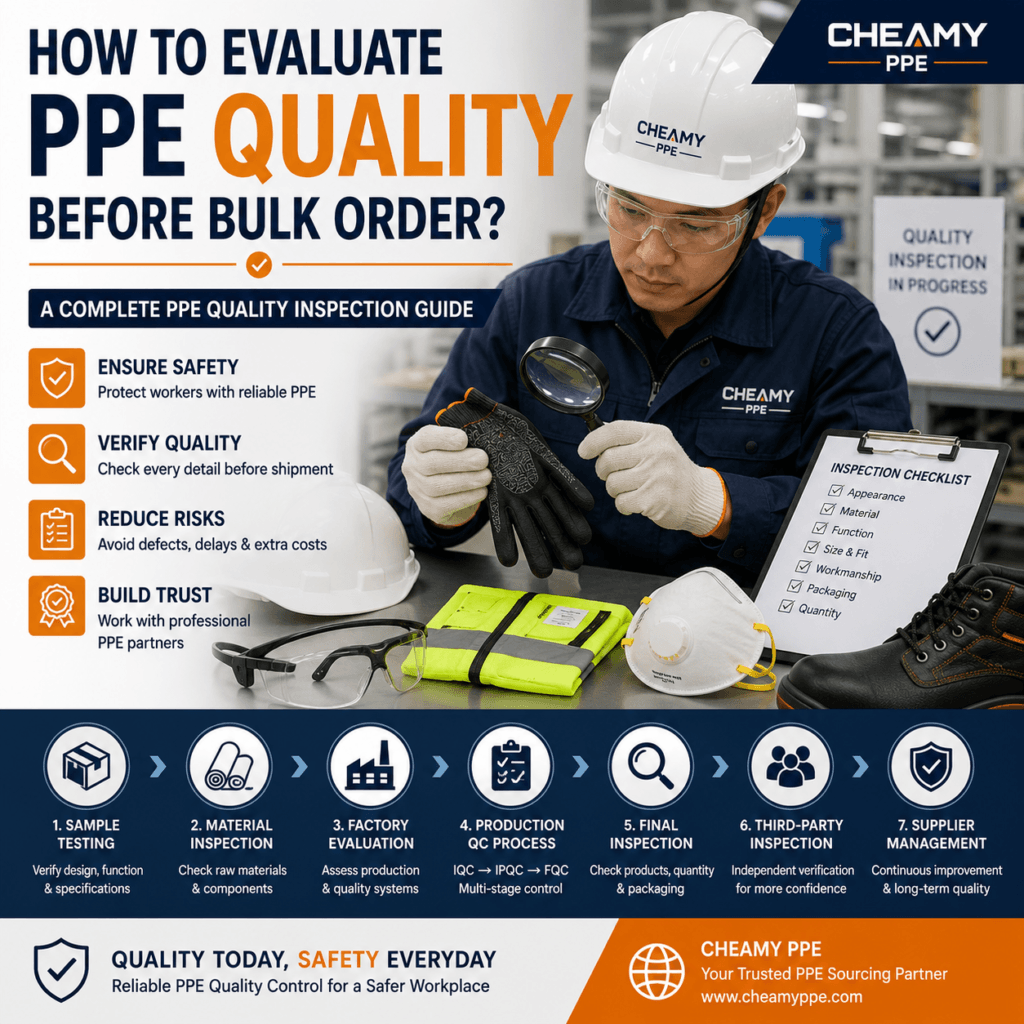
1. Sample Testing Before Production
The first step in PPE quality evaluation is checking samples before confirming bulk production.
Samples allow buyers to verify whether the product meets the agreed requirements.
During sample evaluation, check:
Product Appearance
- Overall design
- Workmanship
- Stitching quality
- Surface finishing
- Labels and markings
Product Function
- Protection performance
- Comfort level
- Fit and size
- Ease of use
Specification Compliance
- Material
- Product dimensions
- Weight
- Color
- Accessories
For example:
A safety glove sample should be checked for:
- Palm coating quality
- Grip performance
- Cut resistance level
- Size accuracy
A protective coverall sample should be checked for:
- Fabric quality
- Seam strength
- Zipper performance
- Reflective tape attachment
Sample approval creates a quality reference for future mass production.
2. Material Inspection and Verification
The quality of PPE products starts with the raw materials.
Before production, suppliers should verify that materials meet agreed specifications.
Material inspection may include:
Fabric Inspection
For protective clothing:
- Fabric composition
- Thickness
- Flame resistance performance
- Color consistency
- Shrinkage rate
Plastic and Rubber Inspection
For helmets, goggles, and gloves:
- Material strength
- Flexibility
- Durability
- Chemical resistance
Metal Component Inspection
For products such as safety harnesses:
- Buckle quality
- Metal strength
- Corrosion resistance
Using consistent and qualified materials helps ensure stable product performance during large-volume production.
3. Factory Inspection and Supplier Evaluation
Before placing a large order, buyers should understand the supplier’s production capability.
A factory inspection or supplier assessment can help evaluate:
Production Capability
Check:
- Production equipment
- Manufacturing process
- Production capacity
- Workforce experience
Quality Management System
Review:
- Incoming material inspection
- Production monitoring
- Finished product inspection
- Defect handling process
Supplier Management
A professional PPE supplier should have a structured supplier management system, including:
- Qualified manufacturer selection
- Regular quality evaluation
- Production follow-up
- Continuous improvement
For buyers working with sourcing partners or trading companies, supplier management capability is especially important because it ensures consistent quality across different product categories.
4. Production Quality Control Process
A reliable PPE quality control process should cover different production stages.
A typical QC process includes:
Incoming Quality Control (IQC)
Inspection of raw materials and components before production.
Examples:
- Fabric rolls
- Rubber materials
- Packaging materials
- Hardware components
In-Process Quality Control (IPQC)
Monitoring during production.
Inspect:
- Production procedures
- Product dimensions
- Assembly quality
- Workmanship
Finished Product Quality Control (FQC)
Checking completed products before shipment.
Inspect:
- Product appearance
- Quantity
- Function
- Packaging
This multi-stage inspection process helps identify problems early and prevent defective products from reaching customers.
5. Final Inspection Before Shipment
Final inspection is the last quality checkpoint before goods leave the supplier.
During final inspection, buyers or inspectors usually check:
Quantity Verification
- Ordered quantity
- Carton quantity
- Packing list accuracy
Product Inspection
- Random sampling inspection
- Appearance check
- Functional testing
- Specification verification
Packaging Inspection
- Carton condition
- Labels
- Shipping marks
- Pallet requirements
A final inspection ensures that shipped products match the approved samples and purchase specifications.
6. Third-Party Inspection Services
For large orders or important projects, many international buyers choose third-party inspection.
Independent inspection companies can provide objective quality verification.
Third-party inspection may include:
- Pre-production inspection
- During-production inspection
- Pre-shipment inspection
- Container loading inspection
Benefits include:
- Independent quality assessment
- Reduced purchasing risks
- Better supplier accountability
- More confidence before shipment
This is especially useful for overseas buyers who cannot visit suppliers personally.
7. Maintain Quality Through Supplier Management
PPE quality is not only about one inspection. It requires continuous supplier management.
Long-term quality improvement depends on:
- Clear product specifications
- Regular performance reviews
- Effective communication
- Corrective action when issues occur
- Continuous supplier evaluation
Building a reliable supply chain helps buyers maintain stable product quality across repeated orders.
PPE Quality Inspection Checklist
Before placing a bulk PPE order, confirm:
☐ Samples approved
☐ Materials verified
☐ Supplier production capability evaluated
☐ Quality control process confirmed
☐ Production inspection completed
☐ Final inspection passed
☐ Third-party inspection arranged if needed
☐ Shipping quality documents prepared
Conclusion
Evaluating PPE quality before bulk purchasing is essential for international buyers. A professional quality control process reduces risks, ensures compliance, and helps maintain consistent product performance.
From sample testing and material inspection to final inspection and supplier management, every step contributes to a more reliable PPE procurement process.
At CHEAMY PPE, we work with qualified manufacturing partners and follow structured quality control procedures to help global buyers source reliable safety equipment with confidence — from product selection to final shipment.