Skip to content
Personal Protective Equipment (PPE) is essential for protecting workers from hazards such as falling objects, chemicals, airborne particles, electrical risks, and excessive noise. While most employers understand the importance of PPE, a common question still arises:
Who pays for PPE at work?
In most countries, employers are responsible for providing appropriate PPE whenever workplace hazards cannot be eliminated through engineering or administrative controls. However, there are exceptions depending on local regulations, the type of equipment, and company policies.
This guide explains who is generally responsible for paying for PPE, the responsibilities of employers and employees, and best practices for maintaining a safe and compliant workplace.
Why Providing PPE Is Important
PPE is considered the last line of defense against workplace hazards. Before relying on PPE, employers should first attempt to eliminate or reduce risks through safer equipment, workplace design, or work procedures.
When hazards remain, properly selected PPE helps:
- Reduce workplace injuries
- Protect employees from occupational hazards
- Improve productivity and confidence
- Support compliance with safety regulations
- Lower accident-related costs
Providing suitable PPE is not only a legal obligation in many regions but also an investment in worker safety.
Who Is Responsible for Paying for PPE?
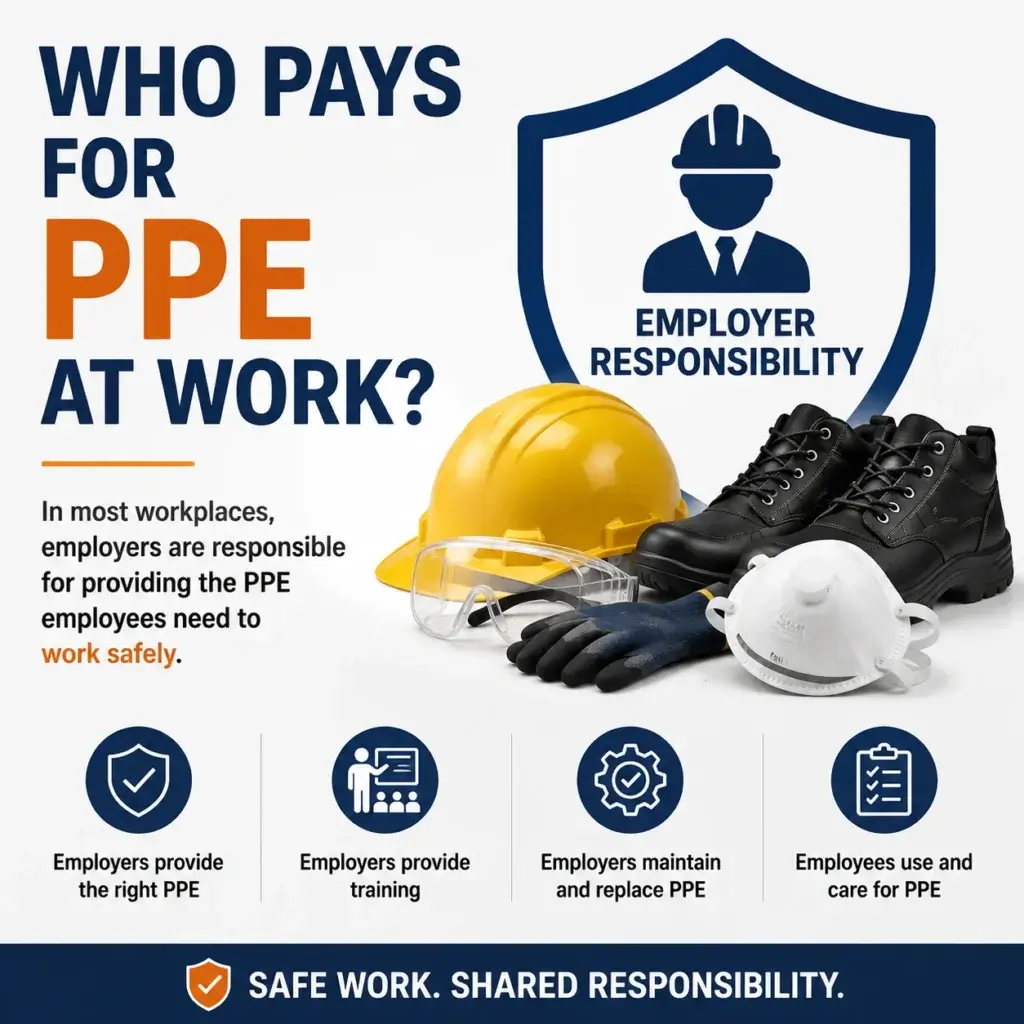
In most workplaces, the employer is responsible for supplying PPE that employees need to perform their jobs safely.
This typically includes equipment such as:
- Safety helmets
- Safety glasses and goggles
- Respirators
- Protective gloves
- High-visibility clothing
- Protective coveralls
- Hearing protection
- Safety footwear (where required by regulations or company policy)
Workers should not be expected to purchase essential protective equipment needed to perform assigned tasks safely.
Employer Responsibilities
A comprehensive PPE program involves more than simply purchasing equipment.
Employers should:
- Conduct workplace hazard assessments
- Select appropriate PPE for each task
- Provide PPE at no cost where required by applicable regulations
- Train workers on proper use and limitations
- Replace damaged or worn PPE when necessary
- Ensure PPE is properly maintained and stored
- Keep records of inspections and training where required
A well-managed PPE program helps reduce injuries while improving compliance.
Employee Responsibilities
Although employers generally provide PPE, employees also play an important role in workplace safety.
Workers should:
- Wear PPE whenever required
- Inspect equipment before use
- Report damaged or missing PPE immediately
- Follow cleaning and storage procedures
- Attend required safety training
- Never modify PPE without authorization
Proper use is just as important as proper selection.
Are There Any Exceptions?
PPE regulations vary between countries and industries.
In some workplaces, employees may choose to purchase optional items for additional comfort or personal preference, such as premium safety footwear or prescription safety eyewear beyond minimum workplace requirements.
However, whenever PPE is required to protect workers from recognized workplace hazards, employers are generally expected to ensure appropriate protection is available.
Always follow the applicable occupational safety regulations in your country or region.
What Happens If PPE Is Damaged?
PPE should be replaced whenever it can no longer provide adequate protection.
Employers should establish procedures for:
- Reporting damaged equipment
- Inspecting PPE regularly
- Replacing worn items promptly
- Maintaining sufficient replacement inventory
Delaying replacement may increase the risk of workplace injuries and equipment failure.
Building an Effective PPE Program
Providing PPE is only one part of workplace safety.
A successful PPE program should include:
- Regular hazard assessments
- Appropriate product selection
- Employee training
- Routine inspections
- Maintenance schedules
- Timely replacement
- Continuous safety improvement
When these elements work together, organizations create a safer working environment while reducing long-term operational risks.
Common Questions About PPE Costs
Does an employer have to replace worn PPE?
In most cases, yes. PPE that is damaged, expired, or no longer provides adequate protection should be replaced promptly.
Can employees bring their own PPE?
Some organizations allow this, provided the equipment meets workplace safety requirements and has been approved by the employer.
Is training included in a PPE program?
Yes. Workers should understand how to wear, inspect, maintain, and replace PPE correctly to ensure effective protection.
Conclusion
In most workplaces, employers are responsible for providing the PPE required to protect employees from occupational hazards. Supplying appropriate equipment, training workers, and replacing damaged PPE are all essential parts of an effective safety program.
Employees also have important responsibilities, including wearing PPE correctly, inspecting it before use, and reporting any damage immediately. By working together, employers and employees can create a safer, more productive workplace while meeting applicable safety requirements.