Skip to content
Safety gloves are one of the most frequently used types of Personal Protective Equipment (PPE). They protect workers from cuts, chemicals, heat, abrasion, impact, and contamination across industries such as construction, manufacturing, logistics, food processing, and chemical handling.
After repeated use, many workers ask an important question:
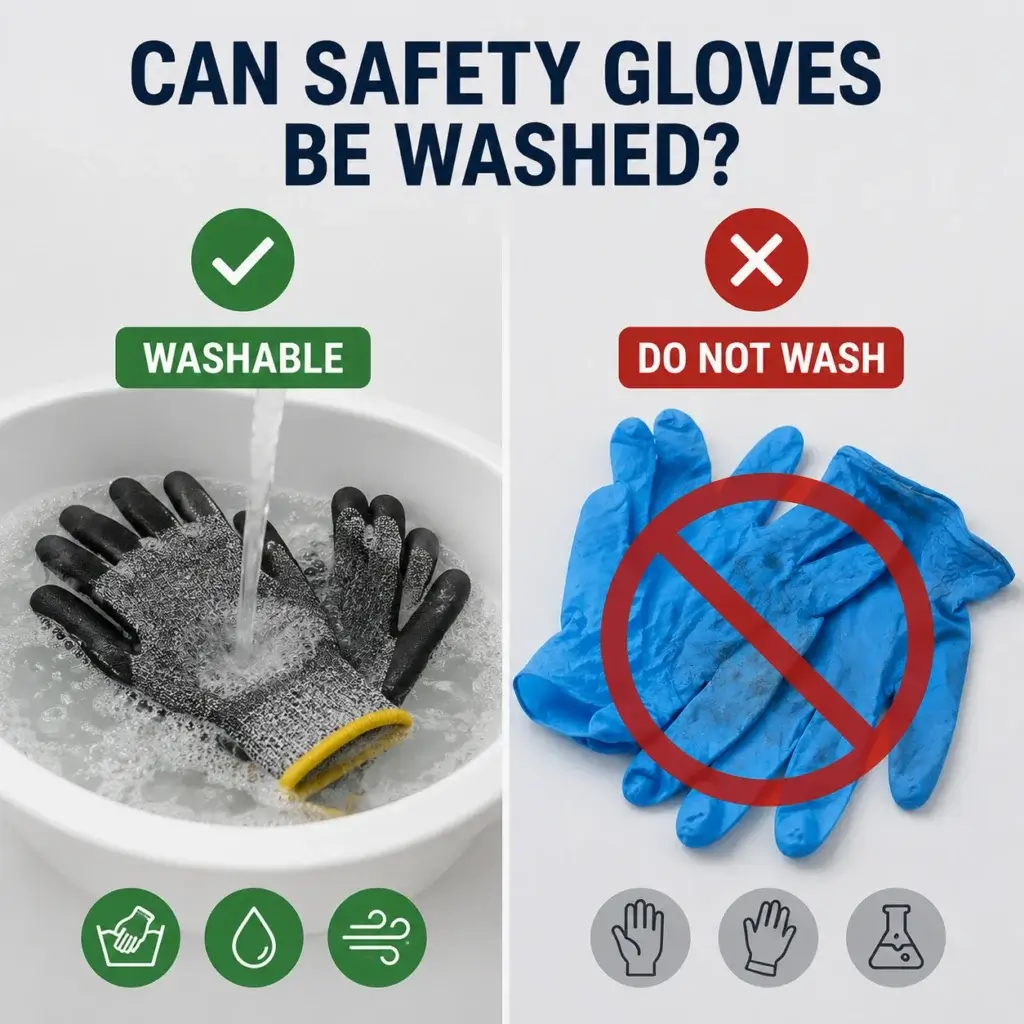
Can safety gloves be washed?
The answer is yes—but not all safety gloves should be washed, and different glove materials require different cleaning methods. Washing gloves incorrectly can reduce their protective performance, shorten their service life, or even make them unsafe to use.
This guide explains which safety gloves can be washed, how to clean them properly, and when it’s time to replace them.
Why Proper Glove Cleaning Matters
Protective gloves are exposed to dirt, sweat, oils, dust, and sometimes hazardous substances during daily work.
Cleaning reusable gloves helps to:
- Remove dirt and contaminants
- Improve hygiene and comfort
- Extend glove service life
- Maintain grip and flexibility
- Reduce replacement costs
However, cleaning should never compromise the glove’s protective properties.
Which Safety Gloves Can Be Washed?
Whether gloves can be washed depends largely on their material and intended use.
Cut-Resistant Gloves
Usually washable
Many cut-resistant gloves made with HPPE, Kevlar®, or similar fibers can be hand washed or machine washed on a gentle cycle, following the manufacturer’s instructions.
Avoid high temperatures that may damage the fibers.
Leather Work Gloves
Conditionally washable
Leather gloves should not be soaked in water or machine washed.
Instead:
- Wipe away surface dirt
- Use leather-specific cleaners when necessary
- Allow gloves to air dry naturally
- Apply leather conditioner if recommended
Improper washing may cause leather to harden or crack.
Nitrile-Coated and PU-Coated Gloves
Usually washable
These gloves can often be cleaned using:
- Mild soap
- Warm water
- Gentle hand washing
Avoid bleach, strong solvents, or excessive scrubbing, which may damage the coating.
Chemical-Resistant Gloves
Depends on the chemical exposure
Some chemical-resistant gloves can be rinsed and reused if they have only been exposed to compatible chemicals and remain undamaged.
However, gloves contaminated by hazardous chemicals may require immediate disposal according to workplace procedures.
Always follow the glove manufacturer’s recommendations.
Disposable Gloves
Never wash or reuse
Disposable nitrile, latex, and vinyl gloves are designed for single use only.
Washing disposable gloves can:
- Damage the material
- Create microscopic tears
- Reduce barrier protection
- Increase contamination risks
They should always be discarded after use.
Best Practices for Washing Reusable Gloves
To maintain glove performance:
- Check the manufacturer’s care instructions.
- Remove loose dirt before washing.
- Wash with mild detergent and lukewarm water.
- Rinse thoroughly to remove soap residue.
- Air dry completely before reuse.
- Avoid direct sunlight and high heat.
Never use harsh chemicals unless specifically recommended.
Common Cleaning Mistakes
Avoid these common mistakes that can shorten glove lifespan:
- Machine drying at high temperatures
- Using bleach or strong solvents
- Washing disposable gloves
- Wearing gloves before they are completely dry
- Ignoring signs of damage after cleaning
Even clean gloves should be inspected before every use.
When Should Safety Gloves Be Replaced?
Cleaning cannot restore damaged gloves.
Replace gloves immediately if you notice:
- Holes or punctures
- Torn seams
- Worn coatings
- Chemical degradation
- Loss of grip
- Reduced flexibility
- Permanent contamination
Using damaged gloves may expose workers to unnecessary hazards.
Tips for Extending Glove Lifespan
Proper maintenance can help reusable gloves last longer.
Good practices include:
- Rotate multiple pairs of gloves.
- Store gloves in a clean, dry place.
- Avoid unnecessary exposure to sunlight.
- Inspect gloves before and after each use.
- Replace damaged gloves promptly.
- Select gloves designed for the specific workplace hazard.
Quality gloves combined with proper care provide better long-term value and worker protection.
Choosing the Right Safety Gloves
Not all gloves offer the same level of protection.
When selecting safety gloves, consider:
- Workplace hazards
- Required protection level
- Material compatibility
- Comfort and dexterity
- Applicable safety standards
- Durability for the intended task
Choosing the correct glove is just as important as maintaining it properly.
Conclusion
Can safety gloves be washed? In many cases, yes—but only if they are designed for reuse and cleaned according to the manufacturer’s instructions. Reusable gloves such as cut-resistant, coated, and some leather gloves can often be safely cleaned, while disposable gloves should never be washed or reused.
Regular cleaning, proper storage, routine inspection, and timely replacement help ensure safety gloves continue to provide reliable protection while extending their useful service life.