Skip to content
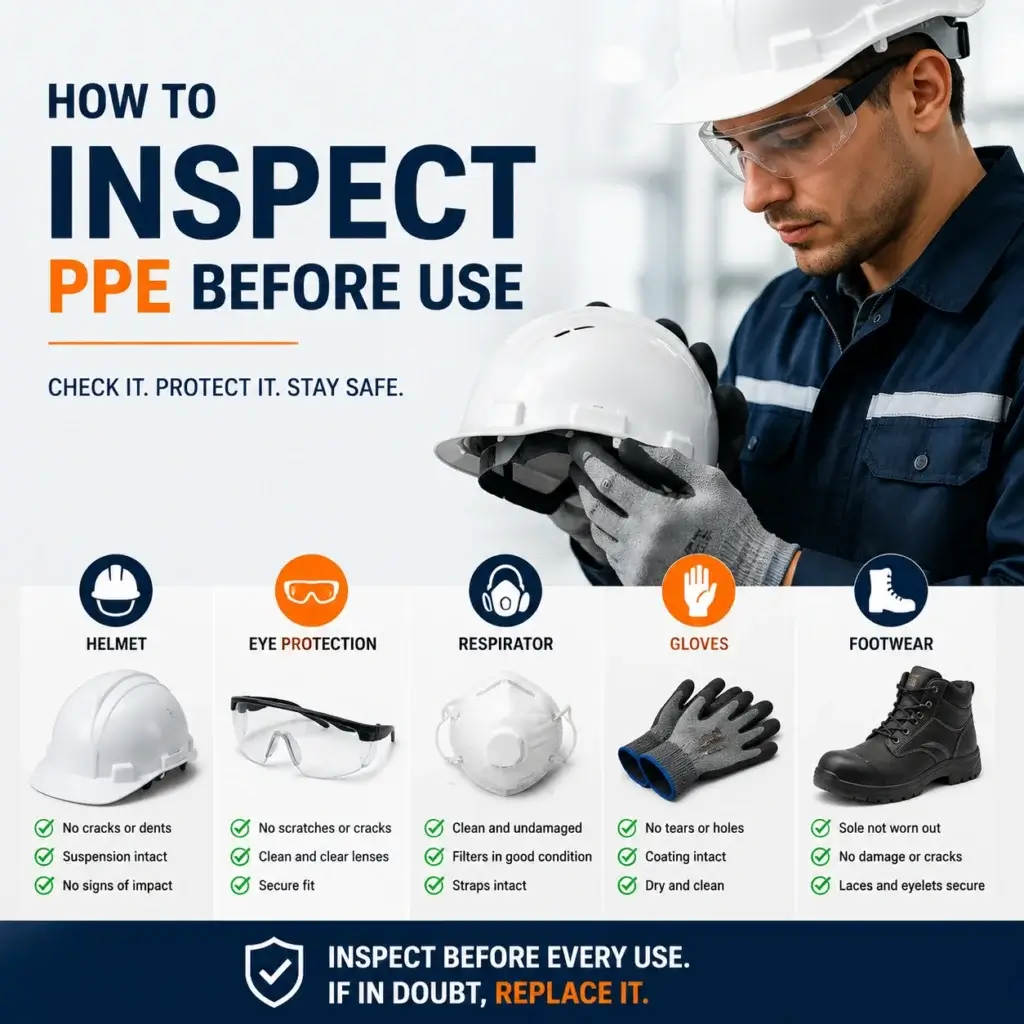
Personal Protective Equipment (PPE) is only effective when it is in good condition. Even certified PPE can fail to provide adequate protection if it is damaged, worn, contaminated, or incorrectly fitted. That’s why inspecting PPE before every use is one of the simplest and most important workplace safety practices.
Whether you work in construction, manufacturing, logistics, mining, or chemical processing, taking a few minutes to inspect your PPE can help prevent accidents, reduce equipment failures, and ensure compliance with workplace safety requirements.
This guide explains how to inspect common types of PPE and what warning signs you should never ignore.
Why PPE Inspection Matters
Daily PPE inspections help identify problems before they become serious safety risks.
Regular inspections can:
- Reduce workplace injuries
- Improve equipment reliability
- Extend the service life of reusable PPE
- Support compliance with safety regulations
- Increase worker confidence and safety awareness
A damaged piece of PPE may look usable but fail when protection is needed most.
A Simple PPE Inspection Checklist
Before starting work, ask yourself the following questions:
- Is the PPE clean and free from contamination?
- Are there any cracks, tears, or holes?
- Does it fit properly and comfortably?
- Are all straps, buckles, and fasteners secure?
- Has the equipment exceeded its service life?
- Does it show signs of excessive wear?
- Is the certification label still visible?
If the answer to any of these questions is No, the PPE should be inspected further or replaced.
How to Inspect Different Types of PPE
Safety Helmets
Check for:
- Cracks or dents
- UV damage or discoloration
- Loose or damaged suspension systems
- Missing components
- Signs of impact
Never use a helmet that has received a significant impact, even if no visible damage is present.
Safety Glasses and Goggles
Inspect for:
- Scratched or cracked lenses
- Loose temples or straps
- Damaged seals
- Dirty lenses affecting visibility
Clear vision is essential for safe work.
Respirators
Before wearing a respirator:
- Check the facepiece for damage.
- Inspect straps and buckles.
- Confirm filters are correctly installed.
- Verify expiration dates if applicable.
- Perform a fit check.
A poor seal greatly reduces respiratory protection.
Protective Gloves
Inspect gloves for:
- Tears
- Punctures
- Worn coatings
- Chemical damage
- Reduced flexibility
Disposable gloves should never be reused.
Protective Clothing
Check for:
- Holes or tears
- Broken zippers
- Missing buttons or fasteners
- Burn damage
- Chemical contamination
Damaged clothing may no longer provide the required level of protection.
Safety Footwear
Before use, inspect:
- Sole wear
- Toe cap damage
- Loose stitching
- Cracks in the upper material
- Loss of slip resistance
Foot protection should remain comfortable and secure throughout the workday.
Warning Signs That PPE Should Be Replaced
Replace PPE immediately if you notice:
- Visible cracks or tears
- Broken straps or buckles
- Missing parts
- Permanent contamination
- Poor fit
- Expired service life
- Failed inspection
Never attempt to repair PPE in ways that could affect its protective performance unless approved by the manufacturer.
Best Practices for PPE Inspection
To maintain workplace safety:
- Inspect PPE before every use.
- Follow manufacturer inspection instructions.
- Clean reusable PPE regularly.
- Store equipment in a clean and dry environment.
- Report damaged PPE immediately.
- Keep replacement PPE readily available.
Building inspection into the daily work routine helps reduce preventable accidents.
Common PPE Inspection Mistakes
Many workplace incidents occur because inspections are rushed or skipped altogether.
Avoid these common mistakes:
- Assuming PPE is safe because it “looks fine”
- Ignoring small cracks or tears
- Wearing expired respirators or filters
- Continuing to use damaged gloves
- Failing to check helmet suspension systems
- Sharing PPE without proper inspection
A one-minute inspection can prevent serious injuries.
Creating a Workplace PPE Inspection Program
Employers should encourage regular inspections by:
- Providing inspection checklists
- Training employees to identify damage
- Recording inspections for reusable PPE
- Replacing defective equipment promptly
- Reviewing inspection procedures regularly
A structured inspection program supports both worker safety and regulatory compliance.
Conclusion
Inspecting PPE before every use is one of the easiest ways to improve workplace safety. A quick visual and functional check helps identify damaged, worn, or contaminated equipment before it puts workers at risk.
By making PPE inspection part of the daily routine, employers and employees can work together to reduce injuries, improve equipment reliability, and ensure personal protective equipment continues to provide the protection it was designed to deliver.